What is wrong with the seat and the bags?
Three problems look the same when the bike is parked. Fading: the black vinyl has gone chalky grey and dry where the sun hits it, but the material is sound. Scuffing: shiny patches on the crown and the sides where the rider slides on and off, with the colour worn through. Damage: a split along a seam, a scuffed hole, or vinyl lifting from its backing. Only the first two are refinishing jobs. A split that opens when you sit on it cannot be painted shut; it has to be repaired first, or the coating will crack along the same line within weeks.
How do you prep vinyl so paint sticks?
Strip it, key it, and keep solvent out of the seams. Wash the cover with a mild degreaser, then remove the silicone left by seat shine products and the oil left by vinyl conditioner with a wax-and-grease remover, followed by a wipe of isopropyl alcohol. A greasy or silicone-loaded surface is the number one cause of a coating that crawls and then peels. Next, dull the surface with a grey abrasive pad rather than sandpaper, which tears vinyl and clogs. Do not flood the seams with solvent: it can wick into the foam and lift the vinyl off its backing. Mask the pan, the staples and any stitching you want to keep visible, and cover the rest of the bike, because overspray travels.
Where does HT-015 fit?
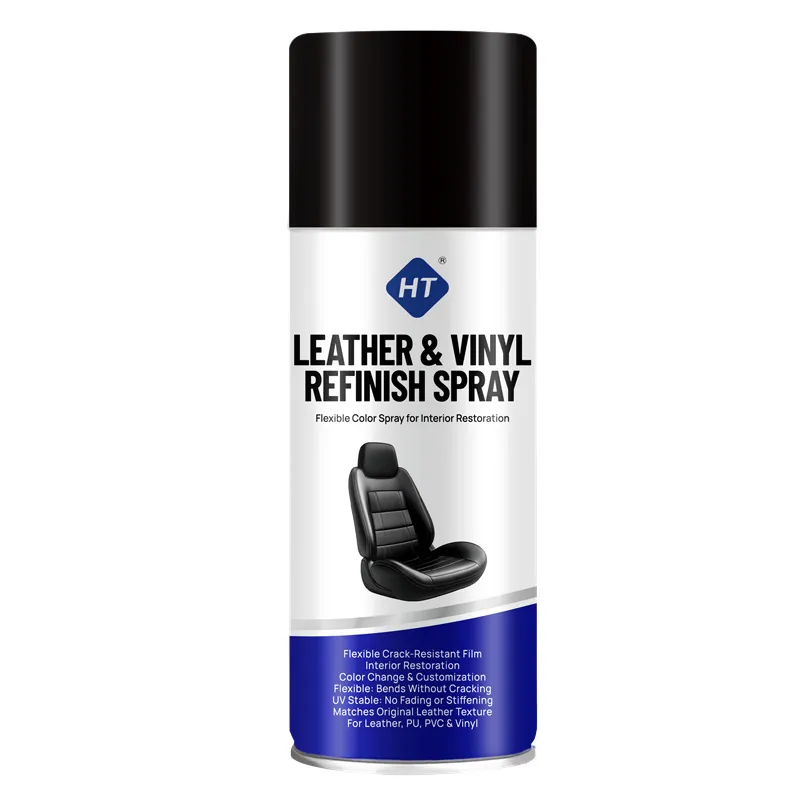
HT-015 is a flexible colour refinish spray for leather, vinyl and interior trim. The film is designed to bend without cracking, so it moves with the foam under the seat instead of splitting on the crown, and it is UV stable so the colour will not fade or stiffen in the sun the way the original surface did. It matches the texture and the low sheen of original vinyl, which is what stops a refinished seat from looking sprayed. One 268 ml can covers a seat plus two saddlebag flaps in two to three thin coats. It is not a filler: it recolours and seals light wear, it does not rebuild a tear. A glossy, stiff finish that creaks means a rigid enamel was used instead of a flexible refinish such as HT-015.
How many coats, and how long before you can ride?
Warm the can first, then work at 20-25 C with humidity under 70 percent, out of direct sun. Spray from 20-25 cm in overlapping passes and build the colour in two or three thin coats with a 10-15 minute flash between them. The film has to stay thin enough to flex, so the heavy first coat that looks fully covering is the one that cracks later. Dry to touch is around 30 minutes, but leave the seat a full 24 hours before you ride, and leave a saddlebag flap lying open and flat for that whole time. Refit the seat after the film has cured, not twenty minutes after the last coat.
Why does a refinished seat crack at the seam?
Because that is where the material moves most. Every time the rider gets on, the cover flexes along the stitch line, and a coating that has bridged an unsound seam cracks there first. Fix the seam before you spray: re-glue an opening seam with a flexible vinyl adhesive, patch a small split from the underside, and let the repair cure fully. Then blend the coating across the repair rather than spot-painting it, because a patch of fresh colour around a repair reads as a patch. If you want the stitching to stay a contrast colour, tape it off cleanly, because paint over the thread makes it disappear.
What mistakes show up a month later?
A coating that stayed soft and picked up dye from jeans was sprayed too thick, in the cold, or recoated before it cured. Craters and peeling mean a shine dressing was still on the vinyl. Grey showing through as a charcoal cast in sunlight means not enough coats over faded grey, which always needs one more than you expect. Cracks along the crease of a saddlebag flap mean the flap was folded while the film was still curing. A web of fine cracks under the new colour means the plasticiser was already gone, and a replacement cover is the honest answer.