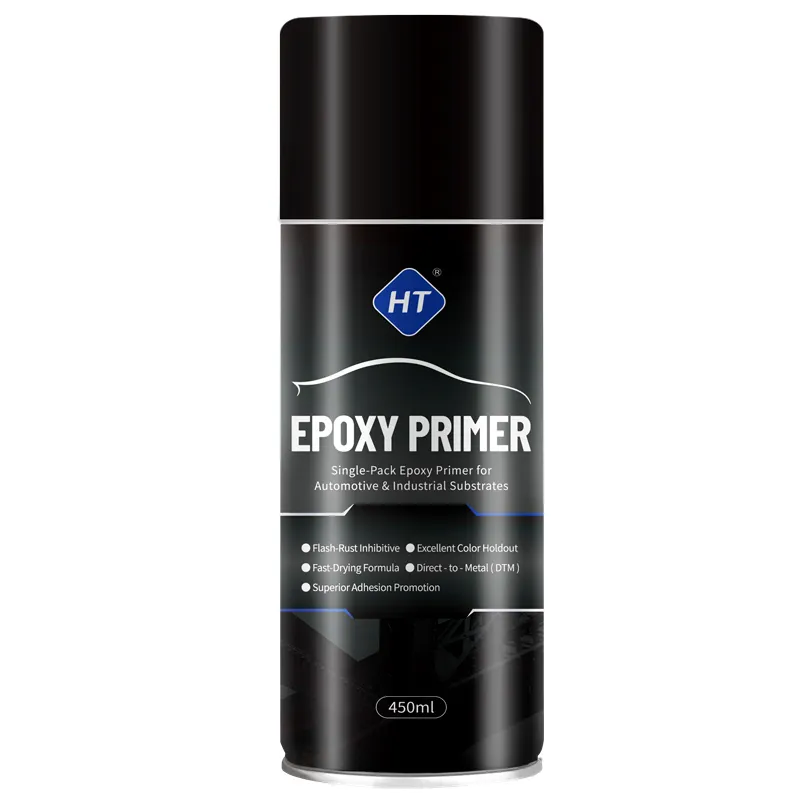
Primers provide adhesion, corrosion resistance, and surface leveling. OEM buyers must specify: the substrate material, environmental conditions, topcoat chemical compatibility, and application method. For production lines, self-priming formulations and 2K systems eliminate a separate priming step.
Why Primer Matters for OEM Quality
In OEM production, primer is not optional -- it is the foundation of the coating system. A quality primer fills minor surface scratches, provides a uniform surface for topcoat adhesion, seals porous substrates, contains corrosion inhibitors for metal, and blocks tannins and stains from bleeding through. Without proper primer, even the best spray paint fails by peeling, flaking, or fading prematurely.
Types of Primer and Their Applications
Epoxy Primer (like HT-031) offers the best adhesion and corrosion resistance -- the gold standard for metal. Frequently used for structural steel, machinery, and automotive parts. Self-Etching Primer contains phosphoric acid that chemically etches bare metal -- fast and effective for aluminum and steel. Adhesion Promoter Primer contains polyolefin bonding agents that allow paint to stick to polyethylene and polypropylene plastics. High-Build Primer fills scratches and imperfections -- 3-5 mil per coat. Sandable -- used in automotive and furniture applications. Rust-Preventive Primer contains zinc phosphate or similar sacrificial pigments that provide active corrosion protection.
How to Choose the Right Primer for Your Product
Match the primer to: Substrate material (metal gets epoxy or self-etch; plastic gets adhesion promoter; wood gets sandable high-build). End-use environment (marine needs epoxy; indoor furniture needs high-build sandable; engine/exhaust needs high-temp primer). Topcoat system (solvent-based topcoats need solvent-compatible primers; water-based need water-based primers). Application method (aerosol primers for small parts; spray-bulk primers for production lines). At Huotian, we stock aerosol primers for sampling and validation before transitioning to bulk systems for production.
Can I skip primer and just use spray paint?
Self-priming spray paints like HT-017 (Cold Galvanizing) and HT-020 (Rust Coating) combine primer and topcoat in one can. They work for moderate applications where ultimate adhesion is not critical. For professional OEM products that need 5+ year durability, separate primer + topcoat is the correct engineering approach. Skipping primer on plastic, glossy surfaces, or corroded metal will always lead to premature failure.
Read more about [surface preparation guide](/en/blog/surface-preparation-for-spray-paint-professional-guide/). Read more about [spray paint drying issues](/en/blog/spray-paint-not-drying-causes-fixes-quality-manufacturing/)