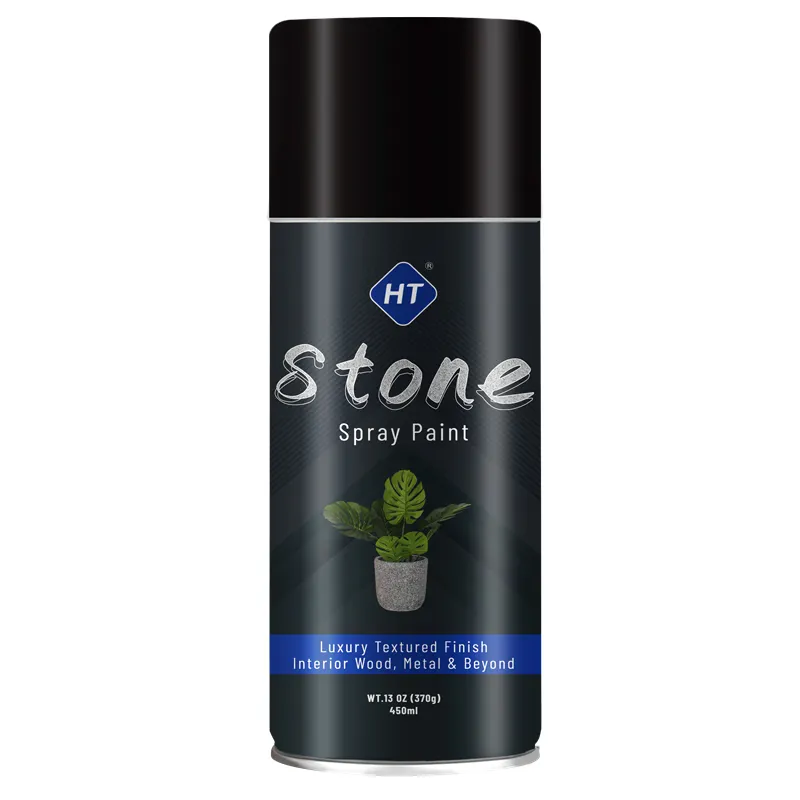
What is a realistic MOQ for spray paint from Chinese manufacturers?
MOQ depends on three factors: can size, color count, and label customization.
Standard stock products (manufacturer's existing formula, standard label): Many factories keep small inventory of popular SKUs like general-purpose spray paint, anti-rust primer, and clear coat. MOQ for these can be as low as 500-1,000 cans per SKU. You are essentially buying from existing stock.
Custom color matching (your PMS or RAL color, but stock label): Requires the factory to run a dedicated production batch. This means cleaning the filling line, mixing your specific color, and filling your batch. MOQ typically 3,000-5,000 cans per color. The line cleaning time amortized over more cans.
Full private label (custom color + custom label + custom packaging): The factory sets up for a complete production run with your branding. MOQ typically 10,000-20,000 cans per SKU. This covers raw material procurement, can printing (or label printing + application), filling, and quality control.
At Huotian, we see most new private label buyers start with 3,000-5,000 cans of 2-3 SKUs to test the market, then scale to full container loads (20,000-50,000 cans) once the product proves successful in their market.
How does private label spray paint actually work?
Private labeling a spray paint product involves five stages:
Stage 1 — Formula selection: You either choose from the factory's existing formulas or request custom formulation matching. Existing formulas are faster and cheaper. Custom formulation requires lab work (2-4 weeks, typically $200-500 per formula if not covered by order volume).
Stage 2 — Can and label design: You choose between lithographed cans (artwork printed directly on metal, high quality, higher MOQ — typically 10,000+) or labeled cans (paper/plastic label applied to blank cans, lower MOQ — 3,000+). Litho cans look more professional but require printing plates ($100-300 per color). Labels are more flexible for small batches.
Stage 3 — Pre-production sample: The factory produces 10-20 sample cans with your approved formula, color, and label. This is the critical checkpoint — you test spray pattern, dry time, color accuracy, adhesion, and label quality before authorizing production. Most factories provide 1-2 rounds of samples at no charge.
Stage 4 — Production and inspection: Full production run with your chosen inspection level. Standard practice is AQL 2.5 (acceptable quality level) for visual inspection and AQL 1.0 for functional testing. Third-party inspection (SGS, Intertek, Bureau Veritas) costs $300-500 per day.
Stage 5 — Shipping: Aerosol products are Class 2.1 dangerous goods (UN1950). They require DG-certified freight forwarders, specialized container loading, and DG documentation. Factor 20-25% higher freight costs compared to non-DG cargo.
What are the real costs at different order volumes?
Here is a transparent cost breakdown for a standard 400ml spray paint, FOB Zhongshan:
Trial order (500-1,000 cans): $0.60-0.80 per can FOB. Factory uses leftover stock or small-batch production. Higher unit cost but low total investment ($300-800). Good for market testing.
Small batch (3,000-5,000 cans): $0.40-0.55 per can FOB. Dedicated production run. Can usually include custom color matching at this volume. Total investment $1,200-2,750.
Standard private label (10,000-20,000 cans): $0.30-0.42 per can FOB. Full private label with lithographed cans. Economies of scale kick in. Total investment $3,000-8,400.
Container load (40,000-60,000 cans): $0.25-0.35 per can FOB. Maximum cost efficiency. Raw materials purchased in bulk, production line runs continuously. Total investment $10,000-21,000.
What drives cost per can: can size (200ml vs 400ml), paint chemistry (2K PU costs more than acrylic enamel), color complexity (metallic costs more than solid), packaging (litho can vs labeled can vs plain can), and propellant type (DME costs more than LPG).
Tip for new buyers: negotiate to have formula development and plate-making fees waived against the first order. Most factories will agree if the first order exceeds 5,000 cans.