Why does shop painting fail inspection more often than it fails in service?
Because the customer inspects paperwork and consistency, and both are easier to get wrong than the resin choice:
- No dry film thickness records, so the specified system cannot be demonstrated.
- The prep grade actually achieved is not the grade that was specified.
- Colour and gloss drift between batches of the same product, which is visible when two units stand side by side.
- Weld seams, edges, and hidden areas that were never stripe coated.
- Transit and handling damage that ships unrepaired.
A coating system is part of the deliverable, like a weld or a material certificate. Once it is treated that way, most of these failures disappear.
Which shop habits cause the most rework?
A consistent short list:
- Skipping degreasing, so weld spatter oil, cutting fluid, and marking ink stay under the film.
- Blasting in humid weather and leaving steel to flash rust before the primer goes on.
- Wrong mixing ratio or skipped induction time on two-component products.
- Over-thinning to make spraying easier, which lowers the build in the same pass.
- Coating a damp or cold substrate in an unheated shop, then discovering the cure problem a week later.
- Missing the overcoat window: too late and adhesion suffers, too early and solvent is trapped in the film.
Every one of these shows up in the field as peeling, blistering, or colour variation, which is why the complaint usually arrives months after the units shipped.
What should a workable in-house paint procedure contain?
One page per product family, and it should state:
- Substrate and prep grade, including what an acceptable repair prep is.
- Primer, intermediate, and topcoat with product names and dry film thickness targets.
- Stripe coat requirements for welds, edges, bolt heads, and holes.
- Environmental limits: minimum substrate temperature, dew point margin, and humidity.
- Mixing ratio, induction, and overcoat window for two-component materials.
- Cure time before dispatch and before crating.
- The record form: thickness readings, batch numbers, date, and photographs.
Name one person accountable per product family. A procedure nobody owns is a procedure nobody follows, and inspectors know the difference.
How should welds, edges, and hidden areas be handled?
Deliberately, because these are where the first field rust appears:
- Stripe coat every weld seam, sharp edge, and bolt head before the full coat. Films pull back from sharp edges, so edges always run thinner than the surrounding panel.
- Coat the inside of drilled holes and drain holes, which are routinely skipped.
- Reach structural intersections, base plates, and surfaces under guards and covers before assembly closes them off.
- Touch up assembly damage as it happens rather than at the end of the line.
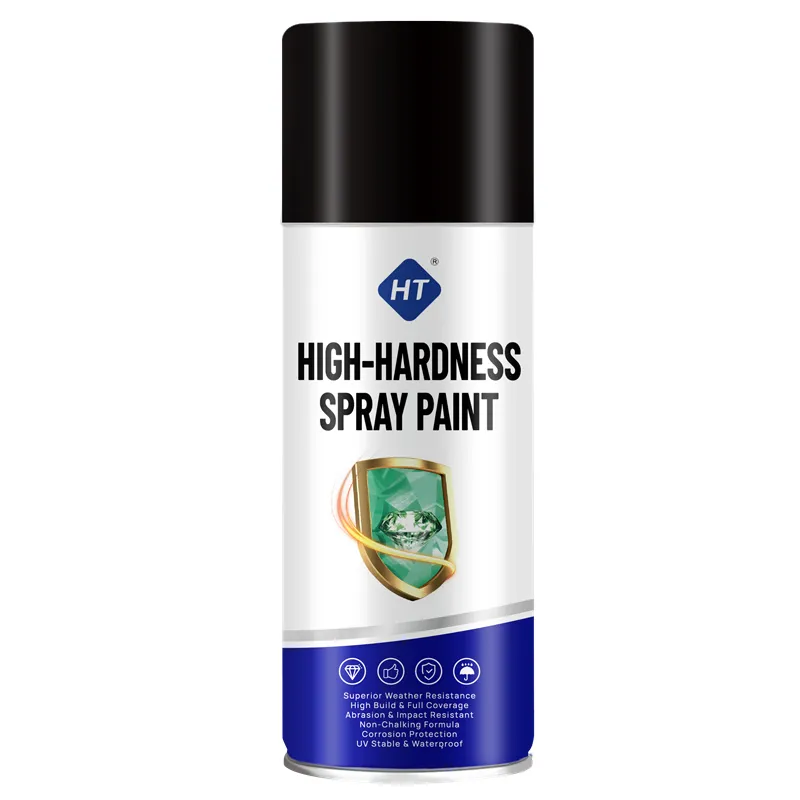
The practical tools here are a brush for stripe coats and an aerosol zinc-rich primer such as HT-017 for bare steel exposed during assembly - marks, drilled holes, and welded brackets.
How do you hold colour and gloss consistent across units and orders?
Treat colour as a controlled variable rather than a purchasing decision:
- Qualify a product from one supplier and stop mixing brands. The same colour name from two manufacturers will not match.
- Keep a master standard panel and compare a drawdown from each batch against it under the same lighting.
- Keep the activator, thinner, and ratio unchanged, since substitutions shift gloss as well as cure.
- Record the batch number on the unit's documentation, so a future repair can be matched.
- Hold touch-up aerosol from the same batch family as the bulk material used on the order.
For a builder shipping multi-unit orders, colour consistency is usually noticed before coating performance - and it is much cheaper to control than to repaint.
What belongs in the dispatch touch-up kit?
The kit exists because most field complaints start with transit damage and unrepaired scratches:
- The system in aerosol form: zinc-rich primer for bare steel, and the matching topcoat - our HT-017, and HT-031 epoxy primer with HT-027 topcoat where a full system is specified.
- Degreaser and abrasive pads or paper for preparing a mark in the field.
- The colour code and batch reference, plus any safety or certification labels that must stay legible.
- A short instruction card and a repair log the customer can countersign on arrival.
Where a contract includes a coating warranty, subcontracting the full system to a specialist remains a valid option. The touch-up kit is for repair and assembly damage - it is not a substitute for delivering the specified system in the first place.