Where do telecom towers and masts actually corrode?
Galvanising protects a tower until it is damaged. Corrosion concentrates in four places:
1. Weld seams and their heat-affected zone, where zinc burned off during fabrication. 2. Field cuts and drilled holes from later modifications, leaving bare steel edges. 3. Bolt heads and connection plates, scratched during erection and prone to crevice corrosion. 4. Base sections and anchor bolts, where soil, water, and chloride accumulate.
ASTM A780 is the recognised practice for repairing damaged or uncoated areas of hot-dip galvanised steel. It specifies cleaning, zinc-rich coating selection, and a minimum dry film thickness matched to the surrounding galvanising - typically at least 100 microns. Anything less, and the repair patch becomes the anode for the whole structure.
What do the aviation obstruction marking rules require?
For structures that require marking, 14 CFR Part 77 and the FAA's advisory circular on obstruction marking and lighting require an aviation-orange and white banding pattern, with band count and width set by structure height, plus obstruction lighting. ICAO Annex 14 applies a comparable scheme internationally.
The consequences for coating work:
- Aviation orange is a defined colour, not a generic orange. An approximate shade is a compliance finding waiting to happen. - Markings must be maintained in good condition. Faded or eroded bands are the most common audit failure on ageing towers. - Bands must stay sharp: overspray blurring the orange-white boundary degrades the marking as effectively as fading. - Both paint and lighting are required where marking is mandated, so repainting never substitutes for failed obstruction lights.
Which coating system is right for tower steel?
It depends on whether you are repairing galvanising or overcoating a weathered structure:
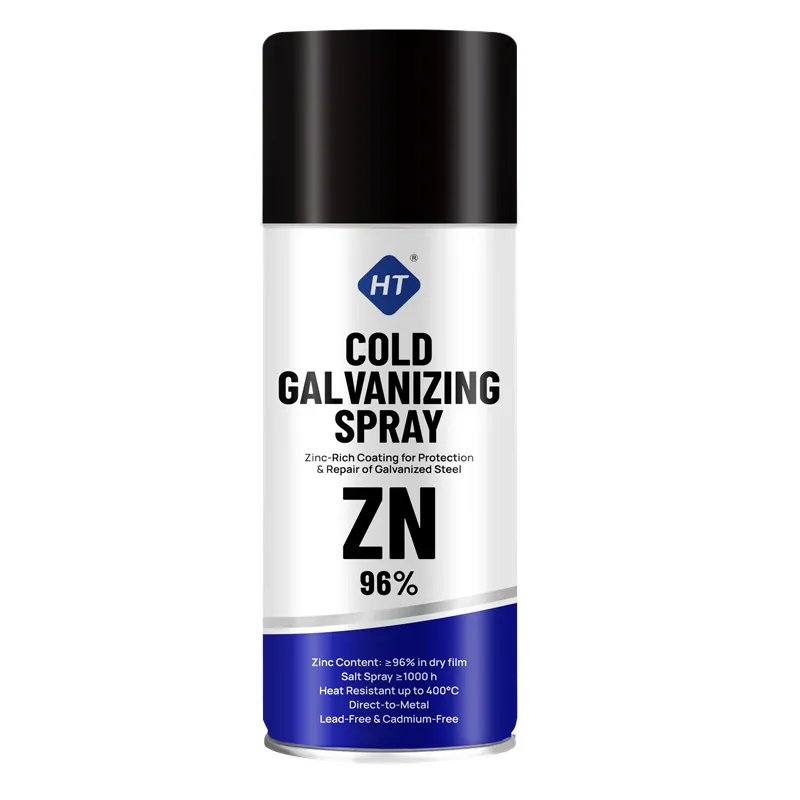
- Galvanising repair: a zinc-rich cold galvanising spray at a minimum of 100 microns dry film, matching surrounding coating thickness. HT-017 Cold Galvanizing Spray is built for this duty and provides sacrificial cathodic protection, so a scratch protects the steel instead of rusting through. - Field cut edges and drilled holes: the same zinc-rich treatment, applied immediately after fabrication. - Overcoating intact but weathered galvanising: remove white rust, abrade to profile, then zinc-rich primer, epoxy barrier, and polyurethane topcoat for C4 or C5 exposure. - Overcoating badly rusted steel: strip or mechanically clean first, because coating flaking rust seals corrosion in.
Never apply a conventional metal primer straight onto new galvanising - new zinc needs weathering or a suitable etch before it accepts a topcoat.
What must never be coated on a climbing structure?
A tower is a fall-protection system as much as a radio platform. Exclusions for the work method:
- Ladder safety climb cable, rail, and anchoring hardware: coating hides strand damage and interferes with inspection. - Fall-arrest anchor points: they must remain inspectable and dimensionally unchanged. - Structural bolt threads and tension hardware: film affects torque verification and retensioning. Mask them. - Grounding and bonding connections: a coating layer raises resistance, so they stay bare and are tested, not painted. - Radomes, antenna apertures, waveguides, and RF connectors: masking is mandatory. A film on a connector is an interference source that is hard to diagnose.
On tall structures the practical method is a zinc-rich aerosol for repair plus colour-matched aerosols for band touch-up - hauling bulk spray equipment up a lattice tower is rarely worth it.
How should a tower coating programme be run?
Treat every tower as an asset with a condition record:
1. Baseline survey: photograph and grade each structure, noting corrosion at welds, cuts, and bases, plus band condition. 2. Prioritise by exposure: coastal, industrial, and humid sites first, plus any tower that recently had equipment added, since modification damages coating. 3. Touch up at every site visit: crews are already climbing. Repair galvanising on new cuts and scratches in the same visit, and correct faded band edges before they need a full repaint. 4. Log per structure: date, areas treated, product, dry film thickness, batch, and photographs. This supports insurance and compliance questions. 5. Respect weather windows: never apply in rain, on wet steel, or within a few degrees of the dew point. Zinc-rich coatings applied to damp steel fail within months.
Guyed masts add anchor and guy-wire inspection to the same programme.
What should buyers specify from an aerosol supplier?
Buy tower consumables on technical evidence, not the colour card:
- Zinc content in the dry film, quoted as a percentage with test data behind it. Premium cold galvanising sprays exceed 90 percent zinc with over 1,000 hours of salt spray per ASTM B117. - DFT per coat, so crews can calculate passes to reach 100 microns. - Galvanising compatibility: designed for zinc surfaces, not just bare steel. - Colour matching to aviation orange and white with a stated tolerance, held across batches, since band consistency matters more here than on most industrial work. - VOC compliance for the destination market, and UN 1950 dangerous goods documentation for shipment.
For distributors, a two-product tower kit - zinc-rich repair spray plus aviation-orange marking aerosol - covers most field demand.