Why do standard exterior paints fail and blister around swimming pool perimeters?
Pool environments combine intense chemical, thermal, and hydrostatic degradation:
1. Aggressive Chemical Oxidation: Sodium hypochlorite (chlorine), calcium hypochlorite pool shock, and cyanuric acid act as aggressive oxidizers that chemically bleach pigments and break down organic paint resins.
2. Saltwater Pool Electrolytic Corrosion: Saltwater chlorine generator systems maintain 3,000-4,000 ppm dissolved sodium chloride, accelerating galvanic corrosion on metal handrail flanges and anchors.
3. Hydrostatic & Osmotic Blistering: Wet pool decks experience constant moisture cycling. Water vapor migrating upward through porous concrete coping pushes against impermeable paint films, causing osmotic blistering.
4. Sun-Bore Chemical Synergy: Strong UV rays accelerate chemical reaction rates of pool sanitizers resting on splash-zone surfaces, causing rapid chalking.
Requirement: Highly cross-linked 2K epoxy, chlorinated rubber, or specialized 100% pure acrylic pool-grade formulations designed for continuous chemical splash exposure.
How do you prepare pool concrete coping and stainless steel railings before painting?
Substrate prep determines whether splash-zone coatings last 1 season or 5 seasons:
1. Calcium & Scum Decontamination: Scrub concrete coping and tiles with a 10% solution of muriatic acid (or sulfamic acid pool cleaner) to dissolve mineral scale, body oils, and sunscreen residues. Rinse thoroughly with clean freshwater and neutralize with baking soda wash.
2. Complete Moisture Evaporation: Concrete coping must dry completely for at least 48 hours after washing. Trapped internal moisture will vaporize under summer sun and lift new coatings.
3. Metal Handrail Abrasion & Passivation: - Stainless Steel (304 / 316 grade): Scuff with 220-grit non-woven abrasive pads to remove tea-stain corrosion. Never use carbon steel wire wheels (causes rust seeding). Wipe with denatured alcohol. - Aluminum Handrails / Diving Board Stands: Sand white oxidation and treat with an acidic self-etching primer to guarantee bonding.
4. Masking Waterline & Pool Water: Float a protective plastic drop film over the pool water edge and tape securely along the coping bead to ensure zero paint drops fall into pool water.
What primer and topcoat combinations survive pool chemical splash zones?
Select coatings engineered specifically for wet, chlorinated splash zones:
1. For Porous Concrete Coping & Pavers: Apply a penetrating acrylic-siloxane bonding primer that seals porosity while allowing concrete to breathe. Topcoat with 2 coats of pool-deck textured acrylic enamel (incorporating anti-slip silica for wet-foot safety).
2. For Metal Railings & Anchor Sockets: Apply 1-2 coats of Self-Etching Metal Primer followed by 2 coats of chemical-resistant Polyurethane or Epoxy Enamel in High-Gloss White, Pool Blue, or Stainless Silver.
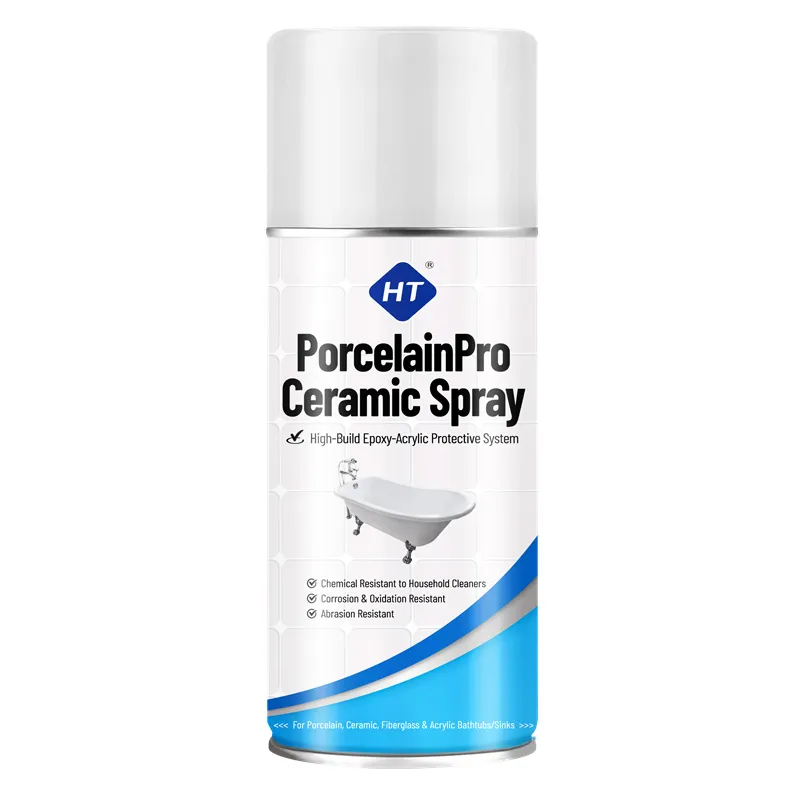
3. Waterline Splash Resistance: For waterline tiles or skimmer throats exposed to constant water splashing, use a 2-part epoxy touch-up aerosol that cures to a glass-smooth, non-porous chemical shield.
4. UV Stability: Ensure topcoats contain hindered amine light stabilizers (HALS) to prevent yellowing under intense poolside sun reflection.
What application techniques guarantee non-slip safety and bubble-free curing?
Applying aerosol coatings around pool decks requires careful execution:
1. Anti-Slip Texture Integration: When spraying horizontal coping stones or step treads, apply a light tack coat, lightly broadcast fine 60-mesh aluminum oxide or polymer non-slip grip powder, let dry 15 minutes, and lock in with a second full color coat.
2. Spray in Early Morning: Spray when deck concrete is cool (15°C to 24°C) before direct midday sun heats coping stones. Spraying on hot concrete causes rapid solvent boiling and pinhole micro-blistering.
3. Thin Cross-Hatch Passes: Apply 2-3 thin coats 15 minutes apart holding the can 20-25 cm away to avoid puddling in concrete grout lines.
4. Full Chemical Cure Window: Allow freshly painted pool coping and ladders to cure for at least 72 hours before splashing chlorinated pool water or turning on saltwater filtration systems.
What commercial value does pool maintenance represent for service contractors and retailers?
Pool perimeter refinishing represents steady, high-ticket seasonal revenue:
1. Annual Spring Pool Opening Boom: Commercial hotels, municipal aquatic centers, residential HOAs, and pool service companies perform annual deck and ladder refurbishments before summer opening.
2. Low-Cost Alternative to Tile Replacement: Touching up chipped coping stones and faded fiberglass steps with specialized aerosols saves property owners thousands of dollars over masonry replacement.
3. High-Velocity Seasonal Merchandising: Pool supply distributors and hardware centers bundle pool acid wash, self-etching metal primer, anti-slip aerosol coatings, and masking supplies.
4. OEM Custom Formulation: Huotian manufactures chlorine-resistant acrylic and epoxy aerosols with high chemical cross-linking, UV-absorbing additives, and international export safety compliance (UN1950).