What is the difference between silicone, lithium, and PTFE lubricants?
The three lubricant types differ in base chemistry and how they handle load, temperature, and environment:
1. Silicone lubricant: A silicone-based oil or grease that sprays as a wet, clear film. It is chemically inert, water-repellent, and does not attract dust as much as oil. It works well on plastic, rubber, and vinyl — it conditions and protects these materials. Limitations: thin film, so it is not ideal for high-load or metal-on-metal bearings; it can creep and contaminate surfaces that need to stay dry (paint prep areas); overspray is hard to remove.
2. White lithium grease: A lithium-soap-thickened grease that clings and provides a thick, long-lasting film. Excellent for metal-on-metal applications with load: door hinges, drawer slides, chassis points, ball joints, latches. Limitations: not recommended on plastics and rubber (some formulations can soften or swell certain plastics); it attracts dust and dirt (a greasy residue builds up over time); not great for precision mechanisms where a thin film is needed.
3. PTFE (polytetrafluoroethylene) lubricant: A dry-film lubricant with suspended PTFE particles (like Teflon). The solvent carrier evaporates, leaving a dry lubricating film. It provides very low friction, is clean (no oily residue), and works on metal, plastic, and rubber. Limitations: the film is thin — better for light-to-medium loads and precision parts; needs the surface to be clean for the film to bond; not ideal for high-temperature or high-load sliding contact.
Summary: silicone = protect plastic/rubber and repel water; lithium = load-bearing metal joints; PTFE = clean, low-friction precision lubrication.
When should you use silicone spray?
Silicone spray is the right choice when the job involves plastic, rubber, vinyl, or water repellency:
1. Plastic and rubber parts: Door seals, window tracks, weatherstripping, rubber gaskets, vinyl trim. Silicone lubricates without softening most plastics and conditions rubber, preventing cracking and squeaking.
2. Water repellency and corrosion prevention: Silicone leaves a water-repellent film that protects electrical connections, battery terminals, and metal parts in damp areas.
3. Low-load moving parts: Drawer slides (light use), zippers, plastic gears, cable mechanisms, and general household squeaks.
4. Mold release and detail protection: Silicone is used as a release agent and to protect plastic/vinyl surfaces (dashboards, trim) from UV and drying.
Limitations to remember: silicone is NOT a heavy-duty metal lubricant — it washes off under load and does not cushion impacts. Avoid using it where overspray could contaminate surfaces that need adhesion (e.g., before painting or bonding — silicone contamination causes paint fisheye). Also, silicone spray on brake components is dangerous (contaminates friction surfaces).
When should you use white lithium grease spray?
White lithium grease is the workhorse for metal-on-metal applications that carry load:
1. Door hinges and hardware: Stops squeaks and provides long-lasting lubrication on door hinges, gate hinges, and heavy hardware.
2. Automotive chassis and suspension: Ball joints, tie rod ends, sway bar bushings, and chassis lubrication points where grease fittings and grease guns are used. The aerosol version reaches tight spots and leaves a clinging film.
3. Drawer slides and tracks: Heavy-duty slides (kitchen drawers, toolboxes, sliding doors) benefit from lithium grease's clinging film — it stays where oil would run off.
4. Latches, locks, and linkages: Hood latches, trunk mechanisms, window regulators, seat tracks — mechanisms that need lasting lubrication under load.
Limitations: avoid white lithium on plastics (some formulations can swell or soften ABS and polycarbonate — check compatibility), avoid on rubber seals (can cause swelling), and avoid on precision/small mechanisms where the thick grease gums up movement. It also attracts dust — in dirty environments, the grease film collects abrasive particles. For outdoor equipment, pair with cleaning so grit does not build up.
When should you use PTFE (dry) lubricant, and what are its advantages?
PTFE dry lubricant is the clean, low-friction specialist:
1. Precision and small mechanisms: Locks, keyholes, hinges on cabinets, small gears, camera equipment, bike chains (light), fishing reels, and any mechanism where a clean, thin film is preferred.
2. Where oil/grease attracts too much dust: In dusty environments (workshops, outdoor equipment, industrial plants), PTFE's dry film does not collect grit the way wet lubricants do. This extends component life in abrasive environments.
3. Plastics and rubbers: PTFE is compatible with most plastics and rubbers — a good general choice when you are unsure of the material.
4. Anti-friction treatment: Applying PTFE to slides, rails, and guides reduces friction and extends wear life. It is also used on fabric fasteners, zippers, and sewing machine parts.
Limitations: the dry film is thin — for heavy loads and high sliding pressures, it wears through faster than grease. The surface must be clean and dry for the film to bond (degrease first for best results). It is not a rust preventative by itself and should not replace proper grease in high-load bearings. Reapplication may be needed more often in high-wear spots.
Quick selection rule: load-bearing metal = white lithium; plastic/rubber/water protection = silicone; clean low-friction precision = PTFE.
What should B2B buyers stock in a lubricant product line?
For distributors, hardware retailers, and OEM buyers, a complete lubricant lineup covers all three types:
1. Stock all three: White lithium grease (metal/load), silicone spray (plastic/rubber/protection), and PTFE dry lubricant (precision/clean). Each has a distinct job — customers buy all three over time.
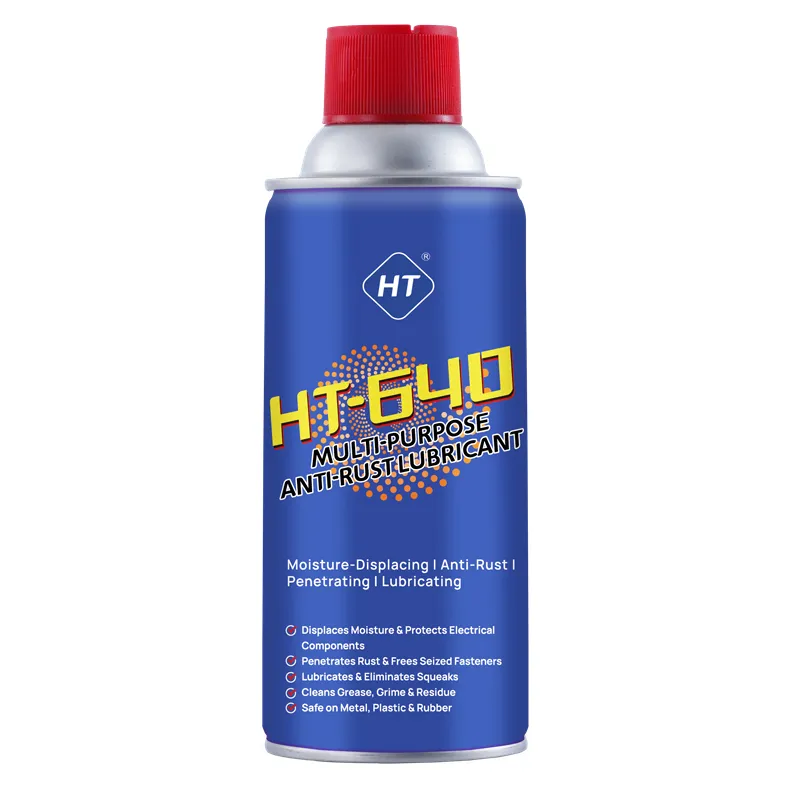
2. Add the specialty SKUs: A multi-purpose penetrating oil (rust release, like Huotian's HT-007/HT-640) and a dedicated chain lubricant extend the range and cover automotive/industrial niches.
3. Packaging formats: 400ml aerosol for retail plus larger formats for workshop/industrial use. Kits (penetrant + lithium + silicone) build basket size.
4. Education sells: Most lubricant misuse comes from confusion. A selection chart (job → product type) on the can or as a display guide increases correct purchases and reduces returns.
5. Quality and compliance: Verify the formulation is free of banned substances (REACH), VOC-compliant for your market, and that plastic-compatibility data is documented. Huotian's lubricant line (HT-007 Multi-Purpose, HT-025 Grease Spray, HT-640 Anti-Rust Lubricant) covers the metal/load and penetrating segments with full documentation.