Why is hydrant and waterworks coating a compliance job first?
Three rule sets apply to the same asset:
- NFPA 291 flow classification: bonnets and caps are colour-coded by available flow. A repaint that shifts the colour signals a flow class the hydrant cannot deliver - a fireground liability. - AWWA C502: covers dry-barrel hydrant construction, including the drain mechanism, breakaway flange, and operating nut. Coatings must not interfere with any of them. - NSF/ANSI 61: any coating contacting potable water must be certified for it. In practice that means exterior coating only - never the barrel interior, and the nozzle threads stay bare.
Add lead paint concerns on pre-1980 assets, and a hydrant repaint becomes a documented maintenance task rather than a quick spray.
Which exterior coating system holds up on a hydrant?
A hydrant sits outdoors for decades and takes UV, salt, freeze-thaw, lawn chemicals, and vehicle contact. The workable exterior system:
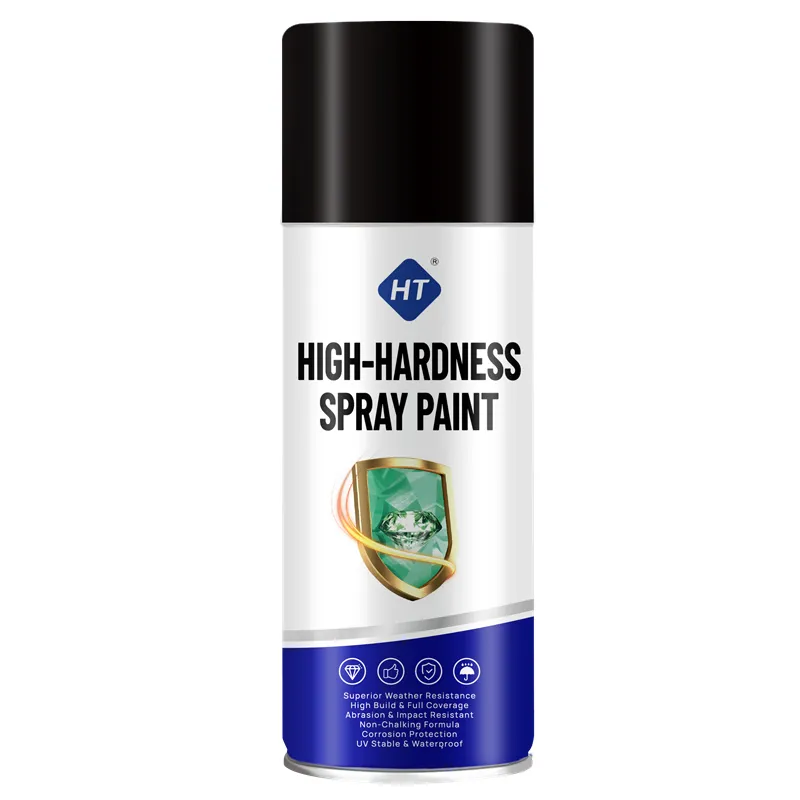
- Primer: epoxy on bare or rusted steel, especially at the barrel base and bonnet joint where water sits. HT-031 Epoxy Primer provides that barrier layer. - Topcoat: high-hardness acrylic-enamel or polyurethane. HT-027 High-Hardness Spray Paint resists abrasion, wash-down, and UV chalking far better than generic enamel. - Colour: matched to the municipality's NFPA 291 class colours and held to a tight tolerance so the fleet stays consistent city-wide.
In coastal and heavy-salt districts, escalate to a two-component polyurethane topcoat. Specify dry-film thickness and recoat windows as for any structural steel, and touch up annually rather than waiting for a full recoat.
What must never be painted on a hydrant - and what prep is required?
Non-negotiable exclusions:
- Operating nut and stem: it must accept a hydrant wrench and turn freely. A painted nut seizes or rounds off. - Nozzle threads and seats: any film prevents a tight hose coupling and can contaminate the water path. - Drain valve ports and the breakaway flange seat: coating here jams the drain or bonds a component designed to break away on impact. - Any hydrant tagged out of service.
Prep sequence: verify and tag the hydrant, degrease, remove chalked and flaking paint, wire-brush rust, convert light rust, spot-prime bare metal, mask the nut, threads, and caps, then coat in thin passes. Cure fully before repressurising - residual solvent under a pressurised seal is a leak waiting to happen.
How do crews keep colour coding and records compliant?
NFPA 291 ties colour to measured flow, so the paint programme sits downstream of the flow test.
- Street hydrants: bonnet and caps carry the flow-class colour; the body may carry the owner's colour. Private hydrants are commonly red to distinguish ownership, with caps still coded by class. - Consistency: hold topcoat colour within a small delta E of the municipal standard. Hydrants repainted over years by different crews visibly drift, and drift undermines the coding system. - Records: log hydrant ID, flow test date and class, coating product, batch, and application date. Inspectors and insurers increasingly ask for that trail.
Distributors holding colour-matched aerosol touch-up in each class colour win the repeat business, because crews touch up far more often than they strip and recoat.
How should water towers and treatment plant steelwork be specified?
Storage and treatment steelwork is a longer-horizon specification:
- Wetted interior surfaces: only coatings certified to NSF/ANSI 61 may be used, and the recoat cycle is tightly regulated because the tank must be drained and disinfected afterwards. Never specify a generic industrial paint here. - Exterior: an ISO 12944 style system - zinc-rich primer, epoxy barrier, UV-stable polyurethane topcoat - dimensioned for local corrosivity. Inland assets sit around C3, coastal and industrial ones at C4 or C5. - Blast containment: older towers may carry lead-based paint, so abrasive blasting requires full containment. That is why many utilities spot-repair and overcoat rather than fully strip.
Exterior systems run seven to ten years in moderate exposure and shorter in coastal salt. All of this work is crew or contractor based, so the consumable opportunity is the maintenance side.
What should a distributor stock for municipal water accounts?
A utility buys consumables that let a small crew keep hundreds of assets compliant between capital projects:
- Colour-matched touch-up aerosols in every NFPA 291 class colour, plus the owner's body colour. - Epoxy primer aerosols for bare metal at the barrel base, bonnet joint, and flange faces. - Zinc-rich cold galvanising spray for flanges and bolts, where paint alone gives no sacrificial protection. - Rust converter for recurring rust at the barrel-to-boot transition. - Line marking paint such as HT-012 for hydrant service zones and valve box identification. - Documentation: SDS files, lead-safe handling guidance, and a colour match report per batch.
Aerosols matter because crews touch up ones and twos on scattered sites. The specification is won by whoever supplies consistent colour and a documented compliance trail, not by the lowest price per can.