Can you spray paint kitchen cabinets, and what makes it different from brushing?
Yes — spray painting is actually the PREFERRED method for cabinet refinishing because it produces a smooth, factory-like finish that brushing cannot achieve. Brushing leaves brush marks and uneven film thickness; spraying lays down a fine, even coat that dries to a smooth surface.
The challenge: cabinets are large, vertical, detailed surfaces with hardware, edges, and doors — and they live in a kitchen where grease, moisture, and heat stress the finish daily. Spray application gives the best result but demands more preparation than brushing because every surface imperfection becomes visible under the smooth finish.
Three options for spray application:
1. Aerosol cans: Easiest for DIY — no equipment, precise control, good for doors, frames, and touch-up. Slower for large runs (coverage is limited per can) but the most accessible.
2. HVLP spray gun: Professional choice for full kitchens. Fast, adjustable pattern, uses liquid cabinet paint. Requires compressor/gun setup and a clean spraying area.
3. Paint sprayer (airless): Fast coverage on large flat surfaces but harder to control on detailed edges — more overspray and masking needed.
For DIY refinishing, aerosol is the practical choice: a kitchen cabinet set typically needs 12-20 cans of 400ml paint plus primer.
What is the proper preparation process for spray painting cabinets?
Preparation is 80% of the job. Skipping any step causes finish failure:
1. Remove hardware and doors: Label every door and hinge. Work on doors flat in a well-ventilated area — spraying horizontally gives better coverage control.
2. Clean thoroughly: Degrease with TSP substitute or a strong degreaser (kitchen grease is the #1 adhesion killer). Rinse and dry completely.
3. Sand: Scuff all surfaces with 120-220 grit sandpaper or a sanding sponge. This creates a mechanical anchor for the primer. For glossy or laminate cabinets, sanding is essential — the paint will not stick to a slick surface.
4. Fill and repair: Fill dents, scratches, and hinge holes with wood filler. Sand smooth.
5. Prime: Apply a quality primer designed for cabinets. Primer seals the surface, improves adhesion, and covers old color. For difficult surfaces (laminate, MDF, melamine), use a bonding primer. Allow full cure per product instructions (often 2-4 hours to recoat, 24 hours to sand).
6. Mask and protect: Cover countertops, floors, backsplash, and anything nearby with drop cloths and painter's tape. Mask cabinet interiors and glass if doors are glazed.
7. Final clean: Wipe surfaces with a tack cloth to remove all sanding dust before painting.
What paint system should you use for cabinets?
Cabinet paint must resist grease, moisture, and daily contact. The product system matters more than the brand:
1. Primer: Use a dedicated cabinet/bonding primer. Bonding primers grip glossy and laminate surfaces. On raw wood, a sanding sealer or stain-blocking primer prevents tannin bleed-through (yellow spots on light finishes).
2. Paint type — two strong options:
- Acrylic enamel (water-based): Low odor, fast dry, excellent color retention, good hardness. Best for DIY and indoor use. Dries to a durable finish that resists grease and cleaning.
- Alkyd or polyurethane enamel (oil-based): Harder, more scratch-resistant, classic 'painted furniture' look. Stronger odor, slower dry, needs solvent cleanup. Choose for maximum durability.
- 2K polyurethane (two-component): The pro-grade system — hardest, most chemical-resistant finish available. Requires careful handling (isocyanates) but gives a furniture-factory finish. Often used for spray-gun applications.
3. Finish sheen: Satin or semi-gloss is the standard for cabinets — matte shows fingerprints and is hard to clean; high gloss magnifies every surface imperfection. Satin hides minor flaws while staying wipeable.
4. Color: Lighter colors show less wear and grease; dark colors show fingerprints and require flawless application. Popular cabinet trends: white, off-white, greige, navy, and matte black.
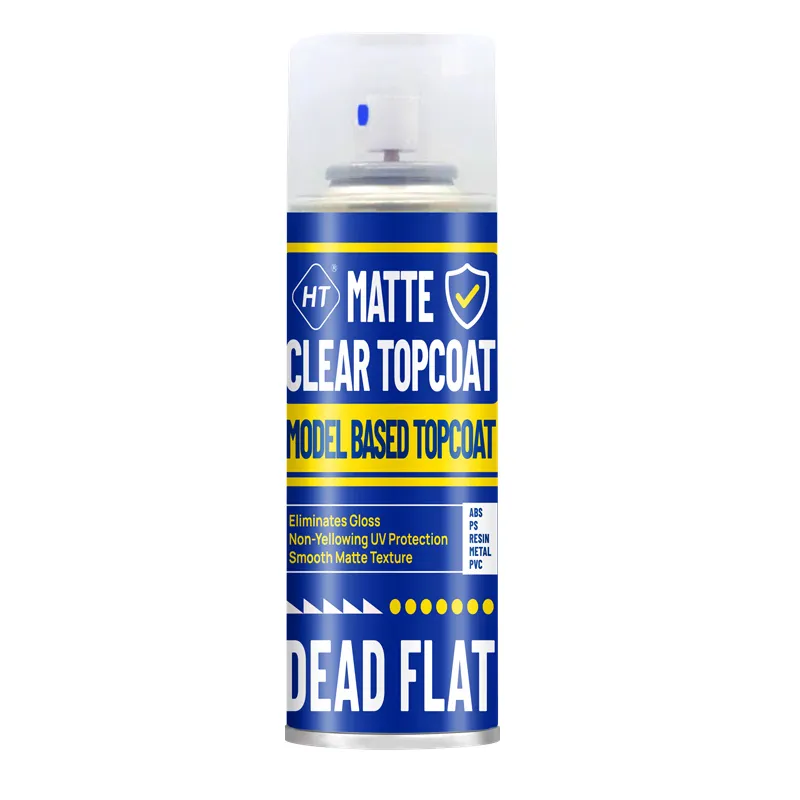
Huotian's cabinet-grade aerosol line (including the HT-011 Matte Clear Topcoat for sealing and protection) is available in custom colors for OEM cabinet manufacturers and private label brands.
What is the correct spray painting technique for cabinets?
Technique determines the final surface:
1. Distance: Hold the can 20-25cm from the surface. Too close = runs and sags; too far = dry overspray and orange peel.
2. Motion: Spray in smooth, overlapping passes — start the pass before the surface edge and release after the edge. Keep the can parallel to the surface, moving at a steady speed. Do not tilt the can (sprays unevenly) and do not stop mid-pass (creates a build-up line).
3. Thin coats: Apply 3-4 thin coats instead of one heavy coat. Wait 10-15 minutes between coats (follow product instructions). Thin coats cure properly; a heavy coat traps solvent, sags, and dries sticky.
4. Orient doors horizontally: Spraying flat eliminates runs on vertical surfaces. Doors are usually finished flat, then left to cure before rehanging.
5. Edges and details: Spray edges first (they are hard to reach once faces are coated), then the face.
6. Cure time: Do NOT rehang doors immediately. Follow the product's full cure schedule — typically 24 hours to handle, 3-7 days for full hardness. Reinstalling hardware or putting stress on a soft finish ruins it. If you use a clear topcoat, apply it only after the base paint has fully cured.
How long does a spray-painted cabinet finish last, and how do you maintain it?
A properly prepared and painted cabinet finish lasts 5-10 years or more. Longevity factors:
1. Preparation quality: The #1 determinant. Grease residue, skipped sanding, or no primer → early peeling. 80% of failures trace to prep shortcuts.
2. Paint quality: Cabinet-grade enamel with proper film build (multiple thin coats) resists daily wear. Cheap general-purpose paint dries softer and chips.
3. Environmental stress: Cabinets near cooktops/ovens face heat and grease; near sinks face moisture. These areas need the most durable finish (alkyd/2K) and regular cleaning.
4. Maintenance: Wipe with a soft damp cloth and mild detergent. Avoid abrasive cleaners and scrubbing pads (they dull the finish). Promptly clean grease splatters — dried grease is harder to remove and can stain.
For OEM cabinet manufacturers and private label brands: cabinet-grade aerosol paint with matched colors, primer, and clear topcoat is a complete retail system. Offering the full system (primer + color + topcoat) improves customer results, reduces complaints, and increases basket value.