Why do hot-dip galvanized solar racks and wind towers still corrode prematurely?
Galvanizing is a sacrificial zinc layer, not a permanent barrier—it depletes over time:
1. Transport & Installation Damage: PV racking is shipped stacked and bolted; steel-on-steel abrasion scratches the zinc coating before it is even installed. Turbine tower sections scuff during road transport on flatbeds.
2. Field Welding & Cut Edges: On-site welding burns away the zinc in a heat-affected zone, leaving bare steel. Drilled holes, cut purlins, and punched bolt slots expose the raw steel core—which has zero corrosion protection.
3. Cut-Edge & Crevice Corrosion: Bolted lap joints and purlin clamps create crevices where moisture wicks in and zinc cannot form its protective patina, leading to accelerated localized consumption.
4. Ammonia & Agricultural Exposure: Solar farms are frequently built on farmland, where airborne ammonia from fertilizer and livestock accelerates zinc corrosion—a documented phenomenon in agricultural PV studies.
5. Offshore Wind's C5-M Reality: Offshore turbine towers face continuous marine immersion and salt fog; ISO 12944-2 defines this as C5-M—the most aggressive atmospheric category, where uncoated zinc is consumed rapidly.
Requirement: A maintained zinc-rich + barrier coating system that supplements galvanizing and is repairable in the field.
What is the correct surface preparation for galvanized structures and weld seams?
Galvanized surfaces require specialized preparation—conventional methods fail:
1. Sweep Blasting or Grinding (Not Full Blast): For intact galvanizing, use a light sweep blast (SSPC-SP 7 / Sa 1) or orbital sanding to create surface profile without removing all the zinc. For heavy zinc oxide (white rust), brush-blast the affected area back to sound galvanizing.
2. White Rust (& White Rust) Removal: The white zinc hydroxide film that forms on weathered galvanizing rejects paint. Remove it with a bristle blaster, abrasive nylon pad, or acidic galvanizing wash, then rinse thoroughly.
3. Weld Seam Preparation: Newly welded seams must be wire-brushed to remove weld spatter, slag, and welding fume residue, then de-scaled. Field welds that burned the zinc are the number-one corrosion initiation point on towers.
4. Cut-Edge & Drill-Hole Prep: Deburr all cut and drilled edges (a 1-2 mm radius reduces edge-thin film risk), then wipe clean. Sharp edges cause paint pull-back and premature failure.
5. Degrease: Wipe with a suitable solvent or use an alkaline degreaser on oil films left by fabrication and hydraulic tools.
6. Chloride Testing (Coastal & Offshore): On coastal sites, verify soluble salts (chlorides) are below 20 mg/m² before coating—chlorides trapped under the film cause blistering and undercutting.
What zinc-rich and barrier coating system delivers 25-year protection?
A three-tier system that supplements galvanizing rather than replacing it:
1. Zinc-Rich Primer (Organic or Inorganic): Apply a zinc-dust-rich primer (80%+ zinc in dry film) to bare steel, weld seams, cut edges, and damaged galvanizing. It provides direct galvanic protection—sacrificing itself to protect the steel exactly like the original galvanizing.
2. Epoxy Barrier Coat (MIO): Apply a micaceous iron oxide (MIO) or high-build epoxy intermediate coat. MIO's plate-like pigment aligns parallel to the surface, creating a tortuous path that blocks water and oxygen penetration—the standard for wind tower external coatings.
3. Aliphatic Polyurethane Topcoat: Apply a UV-stable acrylic polyurethane in white, light gray, or safety colors. UV stability matters enormously on solar farms: chalking and yellowing degrade appearance and eventually the barrier.
4. DFT Targets (ISO 12944): For C4 (industrial/agricultural): total system 200-260 µm. For C5-M (offshore/coastal): total system 280-320 µm, with the epoxy intermediate carrying the bulk of the thickness.
5. Bolt & Connector Touch-Up: Apply zinc-rich aerosols to bolted connection faces, then torque to spec. Touch up after assembly to seal the joint line.
How do you apply coatings on site: towers, ground mounts, and tracker assemblies?
Field application on renewable assets has unique constraints:
1. Tower Sections (Wind): Apply coatings in the fabrication yard wherever possible—surface preparation and controlled conditions produce the best results. On-site tower work uses rope access or platform crews, with stripe coating on flange joints, bolt circles, and the tower door frame—the highest-corrosion areas.
2. Flange Joints & Bolt Circles: The tower section flanges and bolted connections are crevice-corrosion hotspots. Stripe-coat both flange faces and the bolt circle before and after torqueing to full spec.
3. Solar Ground-Mount Purlins & Cut Ends: The most common failure points on ground mounts are cut purlin ends, punched slot edges, and the pile-to-rack connection. Touch-up aerosols reach these with minimal disassembly; a zinc-rich aerosol is the correct field repair product.
4. Solar Trackers (Moving Parts): Tracker bearings, torque tubes, and slew drives involve tolerances—never coat bearing surfaces, gear interfaces, or moving clearances. Mask and protect these areas before any spray application.
5. Environmental Conditions: Apply between 5°C and 35°C with steel surface at least 3°C above dew point, and relative humidity below 85%. On-site coating crews must carry dew-point meters—this is a documented cause of premature offshore coating failures.
What commercial opportunity does renewable energy coating maintenance represent?
Renewable energy asset maintenance is a high-growth, recurring coatings market:
1. Warranty & Asset Life Compliance: Solar and wind owners must prove coating maintenance to preserve 25-30 year manufacturer warranties and financing terms—corrosion documentation is a contractual requirement.
2. Massive Installed Base: Utility-scale solar and wind capacity has grown exponentially; all of that galvanized steel now requires inspection and touch-up maintenance cycles, most of it 5-15 years into service.
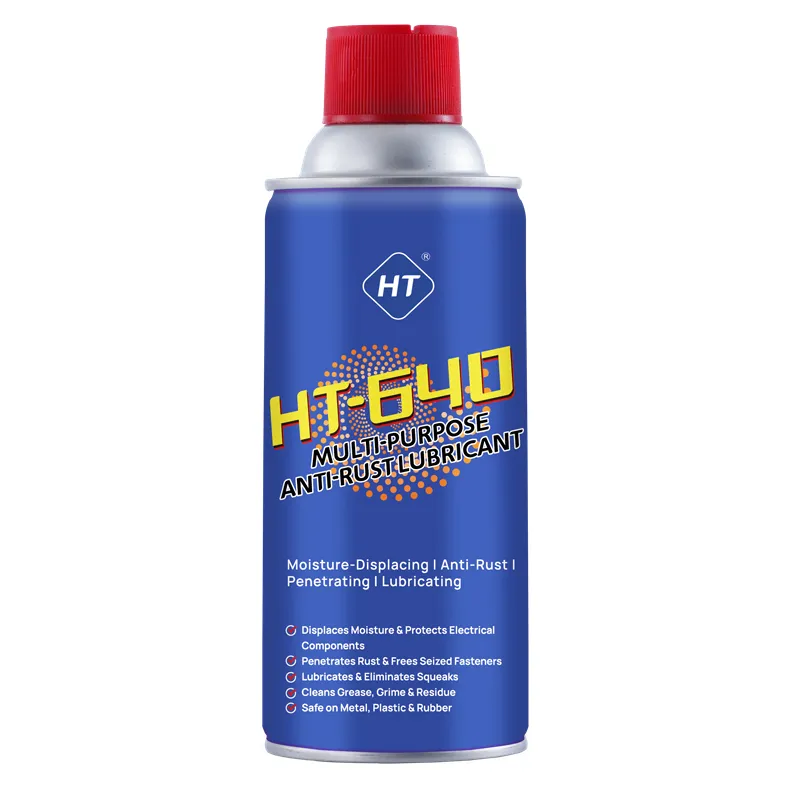
3. Field-Ready Aerosol Advantage: Zinc-rich aerosols allow O&M crews to repair damaged galvanizing on a rooftop or a tower base in minutes—no mixing, no spray equipment, no scaffold for small repairs. This is the highest-margin, highest-repeat product in the category.
4. Turnkey SKU Strategy: Distributors bundle zinc-rich primer aerosol, MIO epoxy, polyurethane topcoat, and edge-prep tools for solar EPCs, O&M contractors, and tower maintenance service companies.
5. Compliance & Certification: Renewable projects demand documented VOC compliance and, for offshore, approval to recognized standards. Huotian manufactures zinc-rich and industrial maintenance aerosols with documented performance data and international export compliance (UN1950).