Why do coatings fail faster at a mine than on any other site?
Because four damage mechanisms run at once, each weakening the coating against the others:
- Abrasion: ore and slurry sliding across surfaces at speed. No film thickness fully resists it. - Impact: rock falling into a truck bed or chute, cracking the film and starting a corrosion cell at the damaged edge. - Corrosion: low-pH water, acid mine drainage, and chloride at coastal or salt-pan sites attack exposed steel. - Uptime pressure: maintenance happens only when scheduled, so damage stays open and wet for weeks.
Add ore dust that holds moisture against steel and high UV at altitude, and ISO 12944 categories C4 to C5 - C5-M in coastal operations - are realistic, not worst case.
Where do coatings actually fail on mining equipment?
Failure is localised, which is good news for the maintenance budget:
- Bucket lips and teeth areas: impact plus sliding abrasion. - Haul truck beds, side walls, and tailgates: impact at loading and sliding wear at unloading. - Chutes, transfer points, and screen decks: continuous sliding abrasion, often wet. - Crusher frames, conveyor frames, and idlers: vibration, dust, and moisture. - Structural steel at the wash plant and around water and reagent tanks: constant wetting and chemical exposure. - Steps, ladders, platforms, and handrails: foot traffic removes the film mechanically, then corrosion starts. - Horizontal surfaces, ledges, and bolted joints: ore dust collects, holds moisture, and creates blistering.
A walk-around with a camera and a note of where blisters appear usually identifies the same twenty square metres that consume the repaint budget every year.
When is paint the wrong tool for the problem?
Be blunt here, because this is where the money goes wrong:
- Sliding abrasion at high angle or speed (chutes, truck beds, bucket lips) is a wear-liner job. Polymer, ceramic, or steel liners and hardfacing outperform any coating. - Impact damage at a loading point is usually a design fix - a wear plate, a rock box, or a lower drop height - not more paint. - Corrosion on structural steel, frames, tanks, platforms, and machinery housings is where coatings belong, and where a specified system lasts.
The diagnostic question is simple: is the steel being lost to sliding abrasion, impact, or corrosion? Each has a different answer, and misapplying either solution wastes money.
How do you specify a system for a mine site?
Five decisions, in order:
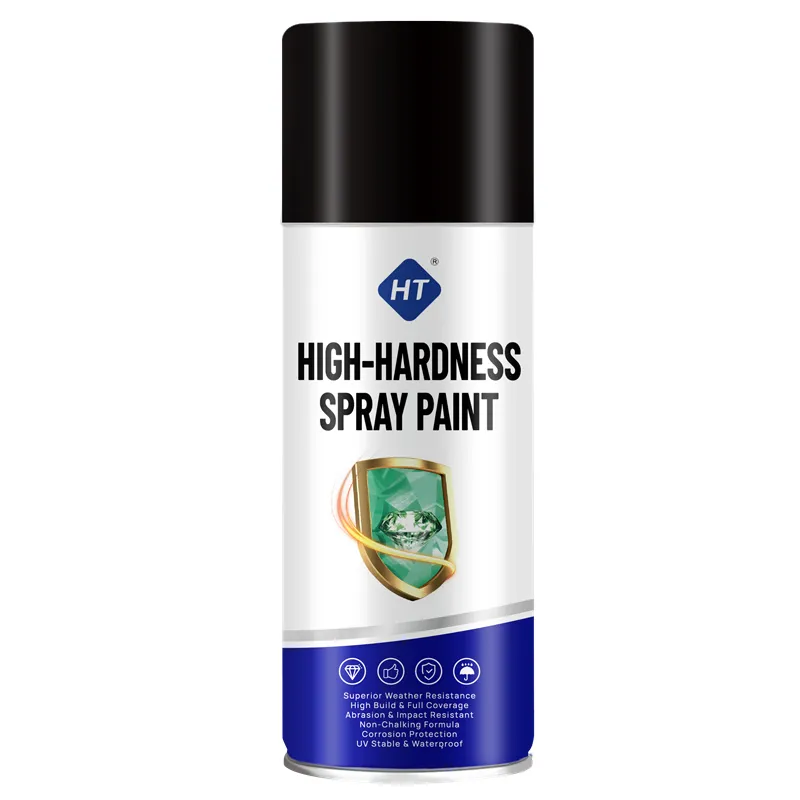
1. Surface preparation, which sets the price. A three-coat system over a poor surface is worthless; dry abrasive blast to a defined angular profile is the shop default. 2. Corrosivity category and durability target from ISO 12944, typically C4 to C5-M with a long target. 3. System build: zinc-rich primer, epoxy intermediate for barrier and edge protection, and a polyurethane topcoat for UV and colour retention. Our range covers this with HT-031 epoxy primer, HT-027 high-hardness topcoat, and HT-017 zinc-rich cold galvanising for galvanised items and local repair. 4. Salt contamination testing: coastal and salt-pan sites need it before coating, because trapped chlorides under a sound film cause early blistering. 5. Verification: dry film thickness per SSPC-PA2, stripe coats on edges and welds, and a record per coat rather than one final number.
Where the asset is galvanised - as most quarry structural steel is - repair damaged zinc with a zinc-rich coating rather than a decorative paint.
What does realistic field repair look like on a working site?
It looks like: no blasting, limited access, and a short window. Plan around it rather than fight it.
- Prepare by hand or power tool to a defined standard, and degrease first. Ore dust carries oil and grease, and coating over it fails. - Use a surface-tolerant epoxy for spot priming where the surface is clean but not perfectly profiled. - Aerosols suit the parts that never justify mixing a batch: handrails, steps, ladders, brackets, bolt heads, small structural sections, nameplates, and previous touch-ups. - Keep a consumables kit on site with primer, topcoat, and the specified colour, so a repair does not wait for a purchase order. - Touch up in planned shutdowns, and fix edge damage before it grows into a corrosion cell.
Field repair never matches shop quality. Its job is to slow the corrosion rate between planned repaints, not to replace them.
How do you turn this into a programme rather than a repair cycle?
Asset-level thinking, kept deliberately simple:
- Rank assets by consequence: wash plant, chutes, truck beds, and loaders first; offices and fencing last. - Grade condition against a standard scale, and photograph it. Vague impressions do not survive a budget discussion. - Set repaint intervals by zone - two to five years for severe zones, longer for structures - and hold the interval rather than waiting for visible failure. - Track the same zones, so year-on-year comparison shows whether the specification is working.
The commercial case is easy on a working mine: the coating on a haul truck is a rounding error against a day of lost production. Mining is a repeat-consumption market with site-based stock, and buyers who specify systems rather than cans are the ones who stay.