What is actually faded on the dashboard?
Two things look alike and need different answers. Dirt or a dressing film sits on top of the plastic and wipes off. Chalky grey, a white bloom in the grain, and scratches that read pale are the plastic itself breaking down under UV, heat and skin oil. A dashboard parked in the sun reaches 70-90 C, which drives the plasticiser out of the surface layer and leaves the pigment behind. Once that layer is chalky, a dressing only darkens it for a few hours. Refinishing puts a new, UV-stable colour film on top, which is the only thing that brings the colour back.
What has to happen before any paint goes on?
Clean, strip, then clean again. Wash the panel with a mild degreaser, then wipe it with isopropyl alcohol. The real enemy is silicone: most interior shine products leave a film that makes paint crawl into craters, and it survives soap and water, so remove it with a wax-and-grease remover and re-wipe. Do not sand textured plastic. You will flatten the grain and create a smooth patch that looks worse than the fade; a light pass with a grey abrasive pad is enough of a key. Trim any lifting edges, mask the glass, vents and stitching, and pull the door card off if you can, because spraying a vertical panel is how runs and dry edges start.
Where does HT-016 fit into an interior job?
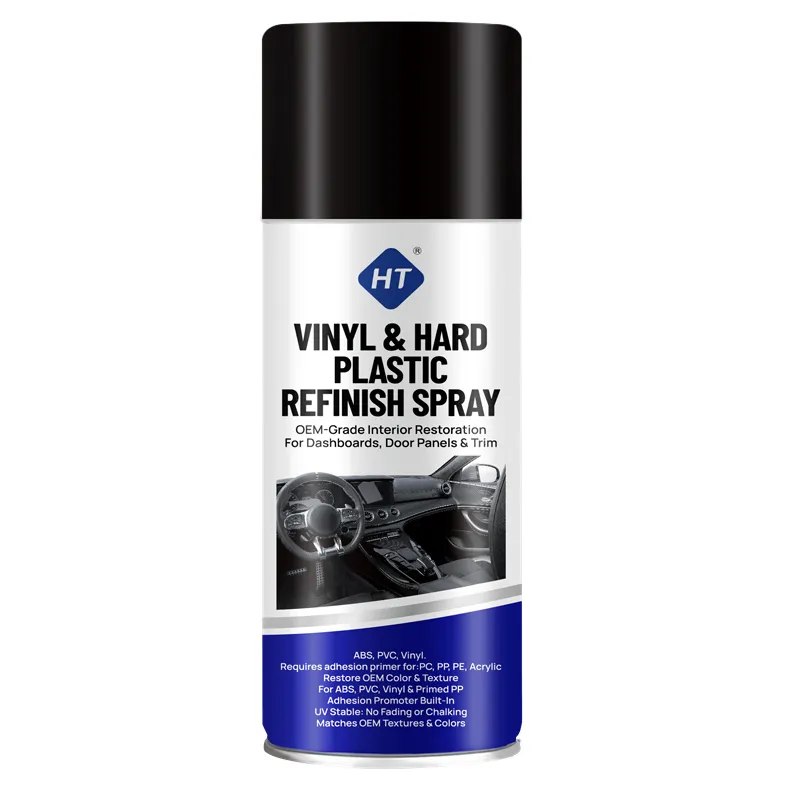
HT-016 is a vinyl and hard plastic refinish spray with the adhesion promoter already built in, so on ABS, PVC and vinyl there is no separate primer step. It restores the original colour and the low matte sheen of interior trim instead of the wet gloss that makes a repaired dash obvious, and it is UV stable so the colour does not chalk again. The film stays flexible, which matters on armrest pads and door pulls that move. One 268 ml can covers a dashboard and two door cards in two coats. It is not for bare, unprimed PP or PE, which need a primer first.
How many coats, and what flash times?
Warm the can in 25-30 C water for two minutes, shake it for a minute, and work at 20-25 C with humidity under 70 percent, out of direct sun, with the panel flat. Hold the can 20-25 cm away and move in overlapping passes. Apply two or three thin coats, not one wet coat, because on textured plastic a heavy coat floods the low spots in the grain and dries blotchy and uneven, and you cannot sand that back. Let each coat flash 10-15 minutes, until it is tacky but no longer stringy. Dry to touch takes about 30 minutes, but leave it 24 hours before you sit on anything or bolt the trim back.
Why does painted interior plastic go wrong?
Five failures cover almost every job. Fisheyes or craters mean silicone was still on the surface, so strip and re-clean rather than adding more paint. Dark glossy patches mean a coat went on too heavy and filled the grain. A finish that stays sticky for weeks means it was recoated before the previous coat cured, or sprayed in the cold. Peeling at the edges means the film went over a dressing or over a repair that was never blended. A black dashboard that reads grey or purple in sunlight means the colour did not match the original semi-matte, which is the mistake that makes a repair stand out.
When should the part be replaced instead?
Refinishing is for wear, fading and colour loss. It is the wrong tool for deep gouges in ABS, cracks that move, or vinyl that has sagged away from its foam, because the film telegraphs those shapes instead of hiding them. Never coat an airbag cover: the coating can change how the cover tears, and that is a safety item, not a trim item. Hard, unprimed PP or PE panels need a dedicated primer. Leather seats are a different product, HT-015 rather than HT-016. And if the plastic is brittle and cracking in a web pattern, the material is done and a replacement panel beats a refinish that fails in a season.