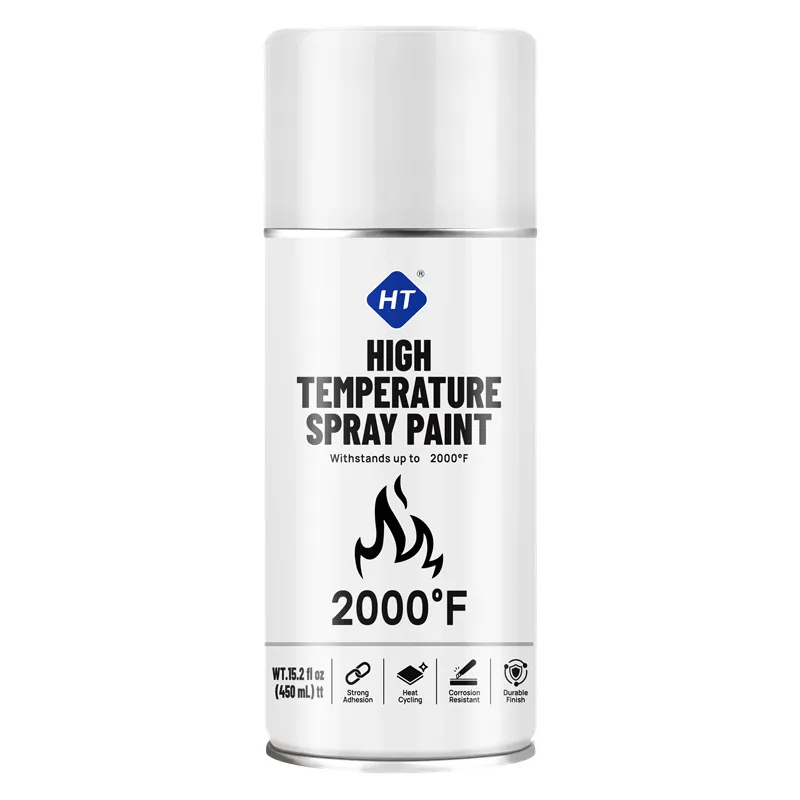
What is the standard spray paint coverage rate per can?
A standard 400ml aerosol spray paint can covers approximately 10-12 square meters (108-129 square feet) per can under ideal conditions. However, this number varies significantly based on several factors.
For industrial coatings like HT-001 High Temperature Spray Paint, coverage is typically 8-10 sqm per can because the formulation is denser with higher solid content. For lighter coatings like HT-033 Magnetic Spray Paint, coverage can reach 12-14 sqm per can.
The key metric for B2B buyers is not just raw coverage, but coverage per dollar — which depends on both the can's coverage rate and the unit price at your order volume.
What factors reduce actual spray paint coverage?
Real-world coverage is always lower than the theoretical maximum. Here are the main factors that reduce coverage by 20-40%:
Surface porosity — rough concrete, unsealed wood, and rusted metal absorb more paint. A porous surface can reduce coverage by 30-40% compared to smooth metal. Color change — covering a dark surface with a light color requires 2-3 coats instead of 1, effectively halving your coverage per can. Application distance — spraying too close (under 20cm) deposits too much paint in one area, wasting material. The optimal distance is 25-30cm from the surface. Wind and temperature — outdoor application in windy or cold conditions causes overspray and poor adhesion, reducing usable coverage by 15-25%. Nozzle type — different spray tips produce different spray patterns. A wider fan tip covers more area per pass but may require more paint for adequate thickness.
How do I calculate how many cans I need for a project?
Use this formula for accurate estimation:
Total cans = (Total surface area in sqm × Number of coats) ÷ Coverage per can
Example: Painting 100 square meters of steel fencing with 2 coats using HT-001 (coverage: 9 sqm/can) 100 × 2 ÷ 9 = 22.2 cans → order 25 cans (adding 10% buffer)
For B2B projects, always add a 10-15% buffer for:
- Overspray waste (typically 10-15% of paint is lost to overspray)
- Touch-ups and quality corrections
- Edge cases and complex geometries
Pro tip: Request a spray-out test card from your OEM supplier. This shows actual coverage on your specific surface type, which is more accurate than generic specifications.
How does coverage rate affect bulk purchasing decisions?
Coverage rate directly impacts your cost-per-square-meter, which is the real metric for comparing suppliers.
Example comparison:
- Supplier A: HT-001 at $2.50/can, coverage 9 sqm/can = $0.28/sqm
- Supplier B: Generic high-temp paint at $1.80/can, coverage 6 sqm/can = $0.30/sqm
Even though Supplier B's can price is lower, Supplier A delivers better value per square meter. This is why experienced distributors always request coverage data alongside pricing.
When negotiating with OEM partners, ask for:
1. Coverage rate on smooth steel (standard reference surface)
2. Coverage rate on your specific substrate
3. Recommended number of coats for your application
4. Drying time between coats (affects total project time)
Huotian provides spray-out test cards with every sample order, showing actual coverage on multiple surface types.
What is the difference between theoretical and practical coverage?
Theoretical coverage is calculated in laboratory conditions: smooth surface, optimal temperature (20-25°C), correct spray distance, single coat, no wind. It represents the maximum possible coverage.
Practical coverage is what you actually achieve in real-world conditions. For aerosol spray paint, practical coverage is typically 50-70% of theoretical coverage.
For B2B ordering purposes, always use practical coverage numbers. Here are Huotian's practical coverage rates for popular products:
- HT-001 High Temperature: 7-8 sqm/can (practical)
- HT-009 2K Polyurethane: 8-9 sqm/can (practical)
- HT-002 Stone Texture: 5-6 sqm/can (thicker coating)
- HT-010 Epoxy Primer: 7-8 sqm/can (practical)
Always confirm coverage rates with your supplier for the specific surface you'll be painting. A good OEM will provide this data and can run tests on your sample materials.