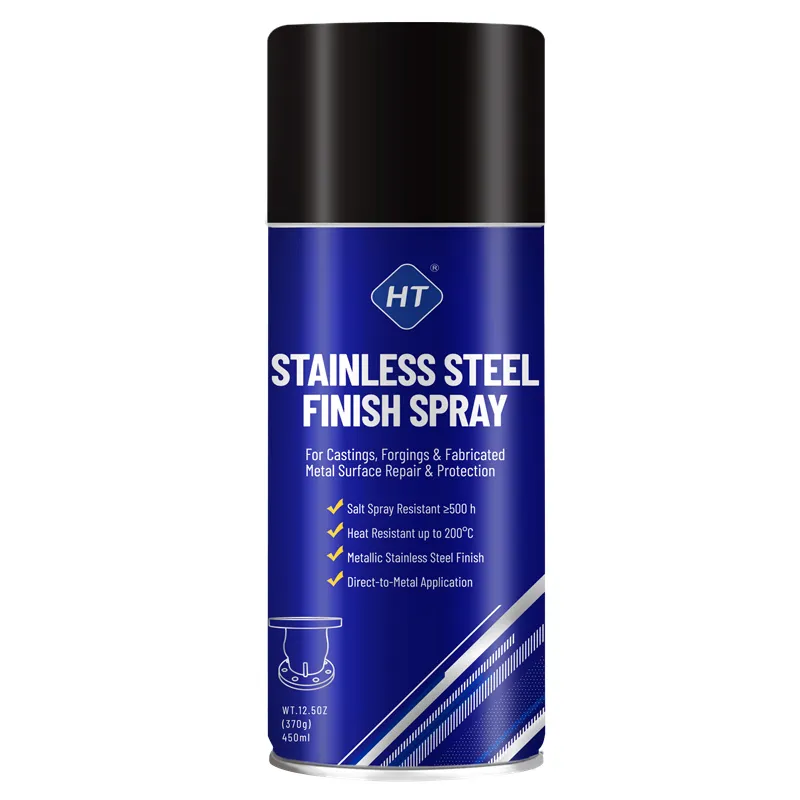
Why Painting Stainless Steel Is Difficult
Stainless steel is designed to resist corrosion and staining, which also means it resists paint adhesion. The chromium oxide layer that protects stainless steel prevents paint from bonding chemically. Successful painting requires breaking through this passive layer with proper surface preparation and using primers designed for stainless steel.
Surface Preparation: The Critical Step
Clean the surface thoroughly with acetone or isopropyl alcohol to remove all oils, fingerprints, and contaminants. Sand the surface with 120-180 grit sandpaper or use a wire brush to create mechanical adhesion. For best results, use a random orbital sander to create uniform scratches. After sanding, clean again with solvent to remove all dust and debris.
Choosing the Right Primer
Self-etching primer is essential for stainless steel. It contains phosphoric acid that chemically etches the metal surface, creating a bond between the primer and stainless steel. Apply 2-3 thin coats of self-etching primer, allowing 10-15 minutes flash time between coats. For industrial applications, use a zinc-rich primer for added corrosion protection.
Best Spray Paints for Stainless Steel
Acrylic enamel over self-etching primer provides good durability for indoor applications. Two-part epoxy paint offers excellent chemical and corrosion resistance for industrial use. Polyurethane topcoat over epoxy primer provides the longest-lasting finish for outdoor stainless steel. For food-grade applications, use FDA-approved coatings.
Application Process
Step 1: Clean with solvent. Step 2: Sand with 120-180 grit. Step 3: Clean again. Step 4: Apply self-etching primer (2-3 coats). Step 5: Allow 24 hours cure. Step 6: Apply topcoat paint (2-3 coats). Step 7: Allow 48 hours full cure before handling. Work in a dust-free environment at 15-25C with humidity below 60%.
Common Mistakes to Avoid
Skipping the self-etching primer is the most common mistake. Regular primer will not bond to stainless steel. Not sanding sufficiently creates poor mechanical adhesion. Applying paint too thick causes runs and poor curing. Applying in high humidity creates blushing (milky appearance). Not allowing adequate cure time between coats leads to adhesion failure.
Industrial Stainless Steel Coatings
For industrial applications requiring chemical resistance, a three-coat system is recommended: self-etching primer, epoxy intermediate coat, and polyurethane topcoat. This system provides maximum corrosion resistance, chemical protection, and UV stability. Huotian offers complete stainless steel coating systems in aerosol format for industrial maintenance.
Frequently Asked Questions
Q: Can you spray paint stainless steel directly? A: No, stainless steel requires self-etching primer first. The chromium oxide layer prevents direct paint adhesion.
Q: What primer is best for stainless steel? A: Self-etching primer is essential. It contains phosphoric acid that etches the surface for chemical bonding.
Q: How do you prepare stainless steel for painting? A: Clean with solvent, sand with 120-180 grit, clean again, then apply self-etching primer.
Q: Does spray paint stick to stainless steel? A: Only with proper preparation and self-etching primer. Without primer, paint will peel off easily.
Q: What is the best paint finish for stainless steel? A: For durability, use epoxy primer with polyurethane topcoat. For appearance, acrylic enamel provides a smooth gloss finish.