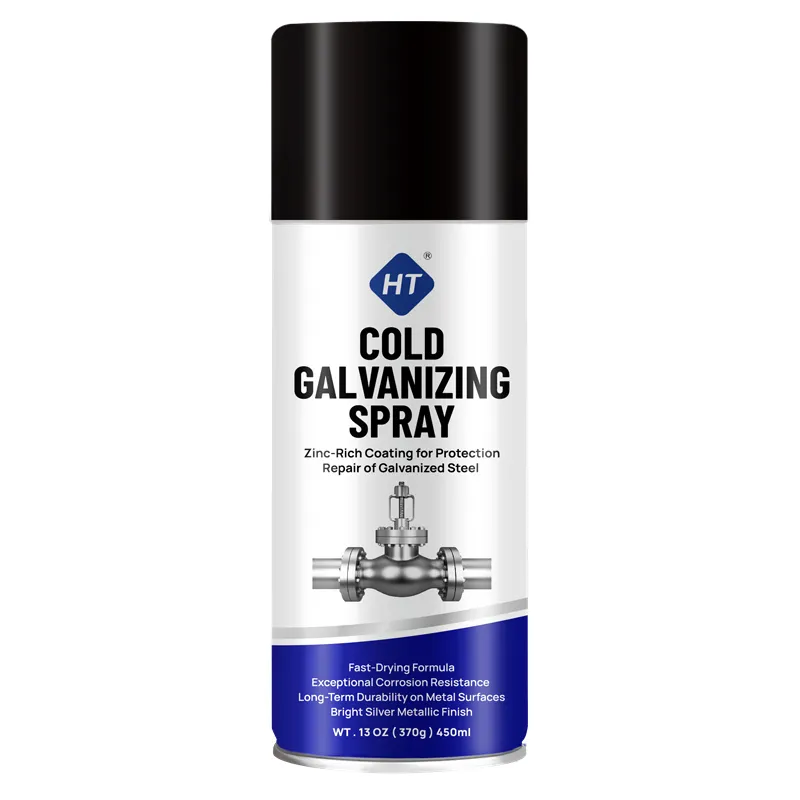
How does zinc spray paint protect steel differently from regular paint?
Regular paint protects steel through barrier protection only — it creates a physical film that blocks moisture and oxygen from reaching the steel. Once that film is scratched, rust begins at the scratch and spreads underneath the paint, causing blistering and peeling.
Zinc spray paint works through cathodic protection (also called galvanic protection or sacrificial protection). Zinc is more electrochemically active (anodic) than steel in the galvanic series. When zinc and steel are in electrical contact with an electrolyte present (moisture), the zinc corrodes preferentially, protecting the steel even at scratches and cut edges.
This is the same principle that makes hot-dip galvanizing work. The key requirement for cathodic protection to function is direct electrical contact between the zinc particles and the steel surface, plus a zinc loading high enough (typically greater than 92% zinc in the dry film) to create a continuous conductive path.
Standard paint + scratch = rust at the scratch within hours in humid conditions. Zinc spray with greater than 92% zinc + scratch = no rust at the scratch because the surrounding zinc sacrificially protects the exposed steel. This is why zinc spray is specified for structural steel repairs, weld seam protection, and any application where the coating will be scratched or damaged in service.
Technical note: The zinc loading in the dry film is measured per ASTM D2371 or ISO 3549. Less than 92% zinc by weight does not provide reliable cathodic protection. Many lower-cost so-called zinc sprays contain 60-80% zinc and only provide barrier protection. Always check the zinc content specification.
Why is zinc spray used on welds specifically?
When galvanized steel is welded, the zinc coating burns off in the heat-affected zone (HAZ) around the weld, leaving bare steel exposed. The weld seam and the surrounding 5-20mm of steel are now unprotected and will rust rapidly.
In structural steel construction (bridges, buildings, towers), the specification usually requires the welds to be cleaned and re-coated. Hot-dip galvanizing the entire welded assembly is impractical for large structures. Zinc spray is the standard repair method recognized by ASTM A780 (Standard Practice for Repair of Damaged and Uncoated Areas of Hot-Dip Galvanized Coatings).
Application process: (1) Clean the weld area with a wire brush to remove slag and spatter. Do not use a grinder unless surface profile is specified — zinc spray needs some surface roughness for adhesion. (2) Degrease with solvent. (3) Apply zinc spray to a minimum dry film thickness of 100 microns (4 mils), matching the surrounding galvanizing thickness. Apply in multiple thin coats (3-4 passes) rather than one thick coat. (4) For severe environments (marine, chemical), apply a topcoat over the zinc spray (zinc + epoxy primer + polyurethane is a standard three-coat system).
B2B note: zinc spray for weld repair is a staple product for steel fabricators, construction companies, and maintenance contractors. It sells in volume because every welded galvanized structure requires it.
What are the key specifications B2B buyers should check for zinc spray?
Four specifications determine whether a zinc spray is fit for industrial use:
1. Zinc content in dry film: Greater than 92% by weight per ASTM D2371. This is the single most important specification. Below 92%, the coating is a zinc-rich paint with limited or no cathodic protection. At greater than 92%, the zinc particles are in continuous electrical contact and provide true galvanic protection.
2. Zinc particle shape: Lamellar (platelet-shaped) zinc particles provide better electrical contact and lower porosity than spherical (atomized) zinc particles. Premium zinc sprays use lamellar zinc. Budget products use spherical zinc. Lamellar zinc also covers better — less zinc weight achieves the same protection.
3. Dry film thickness (DFT) per coat: A single coat should achieve 25-40 microns DFT. Industrial zinc spray for structural repair typically requires 80-120 microns total DFT (3-4 coats). Check that the spray can build film thickness without sagging on vertical surfaces.
4. Adhesion to steel: Pull-off adhesion testing (ASTM D4541 or ISO 4624) should achieve minimum 5 MPa on blast-cleaned steel. Lower adhesion indicates poor wetting of the steel surface by the zinc-rich binder.
Huotian's HT-010 Silver Zinc Spray uses greater than 92% lamellar zinc in a modified alkyd binder, achieves 30-35 microns DFT per coat, and provides cathodic protection confirmed through salt spray testing (ASTM B117, 500+ hours).
What are the most common industrial applications for zinc spray?
Zinc spray serves distinct applications across multiple industries:
1. Weld seam and HAZ repair: The single largest application. Every steel fabricator needs zinc spray for post-weld treatment of galvanized steel. Specification: ASTM A780 compliant.
2. Structural steel touch-up: Galvanized steel beams, columns, and trusses get scratched and damaged during transport and installation. Zinc spray is the on-site repair method. Better than painting over scratches because it restores cathodic protection, not just barrier protection.
3. Pipe and conduit coating: Threaded pipe ends lose their galvanized coating during threading. Zinc spray restores protection. Electrical conduit, plumbing pipe, and mechanical tubing all use this application.
4. Automotive body repair: MIG-welded body panels lose factory e-coat and zinc pre-treatment at the weld. A zinc weld-through primer is applied before welding, or zinc spray is applied after welding, to prevent rust from starting inside body cavities.
5. Marine and offshore: Zinc spray is part of a three-coat system (zinc primer + epoxy intermediate + polyurethane topcoat) for offshore structures, ship repairs, and dock hardware. High film build (120+ microns) required.
6. Fence and gate fabrication: Galvanized fence posts cut to length expose bare steel at the cut. Zinc spray seals the cut ends. Simple application, high volume in construction and fencing supply.
For B2B product strategy: zinc spray can be sold as a single specialty product or bundled with related products like anti-rust primer (HT-028), zinc-rich primer, and topcoats for a complete steel protection system.