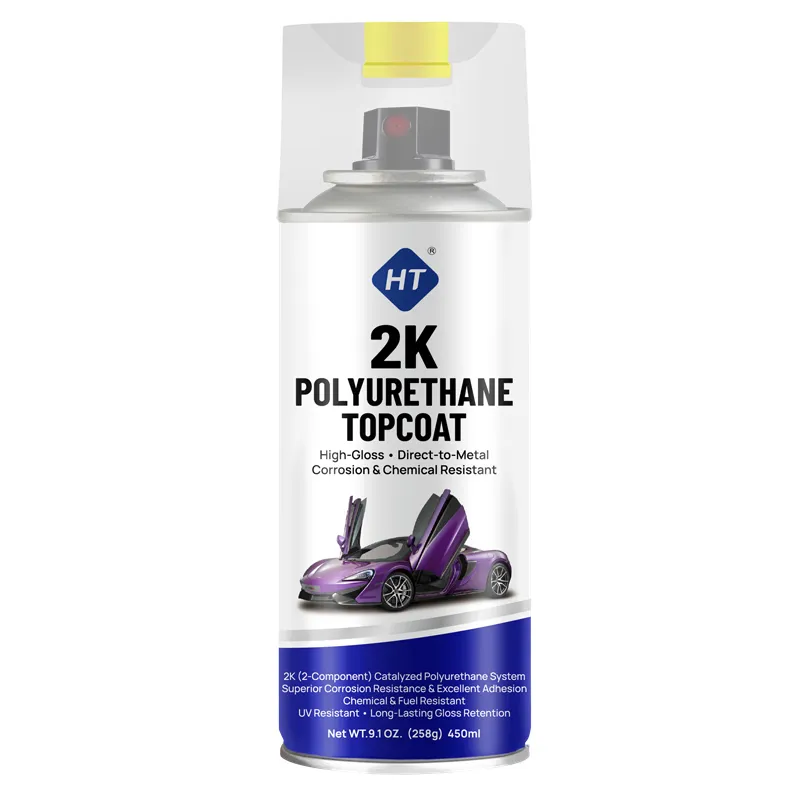
What Is Urethane Spray Paint?
Urethane spray paint, also called polyurethane spray, uses a polyurethane resin base that cures through chemical cross-linking. The result is an extremely hard, durable film with excellent chemical resistance, UV stability, and gloss retention. Urethane coatings are the standard in automotive refinishing, industrial equipment, and high-performance architectural applications. They come in two main formulations: 1K (one-component) for general use and 2K (two-component with hardener) for maximum performance.
What Is Acrylic Spray Paint?
Acrylic spray paint uses an acrylic polymer resin that dries through solvent evaporation. It offers good color retention, fast drying, and ease of application. Acrylic paints are popular for DIY projects, touch-ups, light industrial use, and applications where extreme chemical resistance is not required. They are generally more affordable and easier to work with than urethane alternatives.
Key Differences: Urethane vs Acrylic
Durability: Urethane outperforms acrylic in abrasion resistance, chemical resistance, and UV stability. For outdoor exposure or chemical contact, urethane is the better choice. Acrylic is adequate for interior or low-wear applications.
Drying Time: Acrylic dries faster (15-30 minutes touch dry) compared to urethane (30-60 minutes for 1K, hours for 2K with hardener). Faster drying means quicker project completion but less time for correction.
Application Difficulty: Acrylic is more forgiving for beginners. It sprays easily, has a wider application window, and does not require mixing. 2K urethane requires precise mixing ratios and proper safety equipment including a respirator.
Cost: Acrylic spray paint typically costs 30-50% less than equivalent urethane products. For large-scale projects where budget is a primary concern, acrylic offers good value.
Chemical Resistance: Urethane resists gasoline, brake fluid, solvents, and industrial chemicals far better than acrylic. For automotive underhood applications or industrial equipment exposed to chemicals, urethane is essential.
When to Choose Urethane
Choose urethane for automotive body work, engine bay components, industrial machinery, outdoor furniture exposed to weather, marine applications, and any project requiring maximum durability and chemical resistance. 2K urethane is the professional standard for automotive refinishing.
When to Choose Acrylic
Choose acrylic for interior projects, furniture refinishing, hobby and craft work, touch-up painting, light-duty industrial applications, and budget-conscious projects where extreme durability is not critical. Acrylic is also preferred when fast turnaround is needed.
OEM Considerations
For B2B buyers sourcing spray paint from China, the choice between urethane and acrylic affects formulation, pricing, minimum order quantities, and shelf life. A reliable OEM partner like Huotian can help you select the right chemistry for your target market and recommend formulations that balance performance with cost.
Frequently Asked Questions
Q: Is urethane spray paint better than acrylic? A: Urethane is more durable and chemical-resistant, but acrylic is easier to apply and more affordable. The best choice depends on your application requirements and budget.
Q: Can I use acrylic paint over urethane primer? A: Yes, acrylic topcoats can be applied over urethane primers. However, for maximum performance, matching the paint system (urethane over urethane primer) is recommended.
Q: How long does urethane spray paint last? A: Properly applied urethane spray paint can last 5-10 years or more with good UV resistance and chemical protection. Acrylic typically lasts 3-5 years in similar conditions.