What do matte, satin, and gloss actually mean in measurable terms?
Finish level is quantified by a gloss meter measuring specular reflectance at a standard angle (typically 60 degrees). The results are reported in Gloss Units (GU). Industry-standard ranges:
Matte: less than 10 GU at 60 degrees. Light scatters diffusely. The surface appears flat with no sheen. Maximum hiding of surface imperfections.
Eggshell / flat enamel: 10-20 GU. A slight sheen visible at glancing angles. Compromise between flat and satin.
Satin: 20-40 GU. Soft, low-luster sheen. Reflects light softly without a mirror-like shine. The most popular finish for home and commercial applications.
Semi-gloss: 40-70 GU. Moderate sheen, clearly visible reflection but not mirror-like. Popular for trim, doors, and industrial equipment where some shine and higher durability are wanted.
Gloss (full gloss): greater than 70 GU at 60 degrees. High specular reflectance producing mirror-like shine. Maximum color depth and perceived quality, but maximum visibility of surface defects.
Measurement standard: ASTM D523 (Standard Test Method for Specular Gloss) and ISO 2813. When your supplier quotes a gloss range, request the GU value and measurement angle. 'High gloss' on a label can mean anything from 60-95 GU depending on the manufacturer.
Does finish level affect durability and performance?
Yes, significantly. Here is the honest performance comparison:
Hardness and abrasion resistance: Gloss finishes are typically harder and more abrasion-resistant because they use higher resin content and fewer matting agents. Matte finishes contain matting agents (silica, wax, or polymer particles) that disrupt the film surface — these can reduce hardness and are more prone to burnishing (shiny spots from rubbing).
Scratch visibility: Matte hides scratches much better than gloss. A scratch on gloss paint is immediately visible as a light line. The same scratch on matte is barely noticeable. This is why matte is chosen for high-traffic surfaces, furniture, and automotive wheels.
Chemical resistance: Gloss finishes generally have better chemical and solvent resistance due to the smoother, denser film. Matte films are slightly more porous at the surface, making them more susceptible to staining and marking.
UV durability: No inherent difference from finish level alone — UV resistance depends on the resin chemistry (acrylic, polyurethane, silicone), not the gloss level. A matte acrylic and a gloss acrylic have similar UV performance.
Dirt and maintenance: Gloss surfaces are easier to clean (smooth, non-porous). Matte surfaces show fingerprints and can be harder to clean without leaving marks. However, matte hides existing dirt better between cleanings.
Practical rule: choose gloss for durability-critical applications and high-touch areas; choose matte for aesthetics, defect hiding, and glare reduction.
Which finish should you choose for common applications?
Application-specific recommendations from an OEM perspective:
Automotive wheels: Matte or satin. Brake dust shows less on matte, and wheel scratches are less visible. Gloss wheels look premium but require constant cleaning. Satin black wheels are the industry's best-selling finish for this reason.
Automotive exterior panels: Gloss. Factory finishes are high gloss (90+ GU) for maximum color depth and perceived quality. Matte automotive finishes (wrap-style) are a trend but require specialized maintenance products.
Interior furniture: Satin or matte. Reduces glare in living spaces, hides minor scratches from daily use. Satin is the most popular interior furniture finish.
Exterior furniture: Gloss or semi-gloss. Higher gloss gives better weather and UV resistance due to the denser film. Gloss surfaces also shed water and dirt more effectively.
Industrial equipment and machinery: Semi-gloss. Balance of durability, cleanability, and professional appearance. Full gloss shows every shop mark; matte is hard to clean in oily environments.
Fences, gates, outdoor metal: Satin or semi-gloss. Satin hides application imperfections from brush or roller marks; semi-gloss adds durability. Full gloss on outdoor structures highlights every weld and surface irregularity.
Bathroom and kitchen fixtures: Gloss. Moisture resistance and easy cleaning are critical. Gloss enamel is the traditional choice for bathtubs and countertop fixtures.
Ceiling and wall touch-up: Matte or eggshell. Flattens light and hides previous paint patches. Gloss on walls highlights every imperfection and patch line.
What should B2B buyers specify when ordering finishes for their product line?
When sourcing spray paint for your brand, specify finish precisely to avoid receiving the wrong product:
1. Specify GU range, not descriptive terms: Write '60 degree gloss: 20-35 GU (satin)' in your specification, not 'satin finish'. Suppliers interpret descriptive terms differently. GU values are unambiguous.
2. Request finish consistency per batch: Gloss level can drift between production batches. Specify a tolerance: e.g., '60 degree gloss: 85-95 GU for gloss line, Delta-GU less than 5 between batches'. Acceptable tolerance depends on application — automotive exterior needs tight tolerance, industrial primer can be looser.
3. Specify matting agent quality for matte products: If you order matte paint, ask whether the matting agent is fumed silica or organic wax. Fumed silica provides better scratch resistance; wax matting agents are cheaper but less durable and can re-gloss with rubbing.
4. Request actual GU test data: The factory's COA should include gloss readings at 60 degrees for the production batch. Request initial (1 hour) and cured (24-48 hour) readings — many paints change gloss during cure. Final gloss is what matters for your spec.
5. Consider touch-up compatibility: If your product line includes multiple finishes, verify that touch-up coats match the original finish. Some matte formulations darken or gloss up when touched up because of solvent penetration. Test touch-up on a sample panel before production.
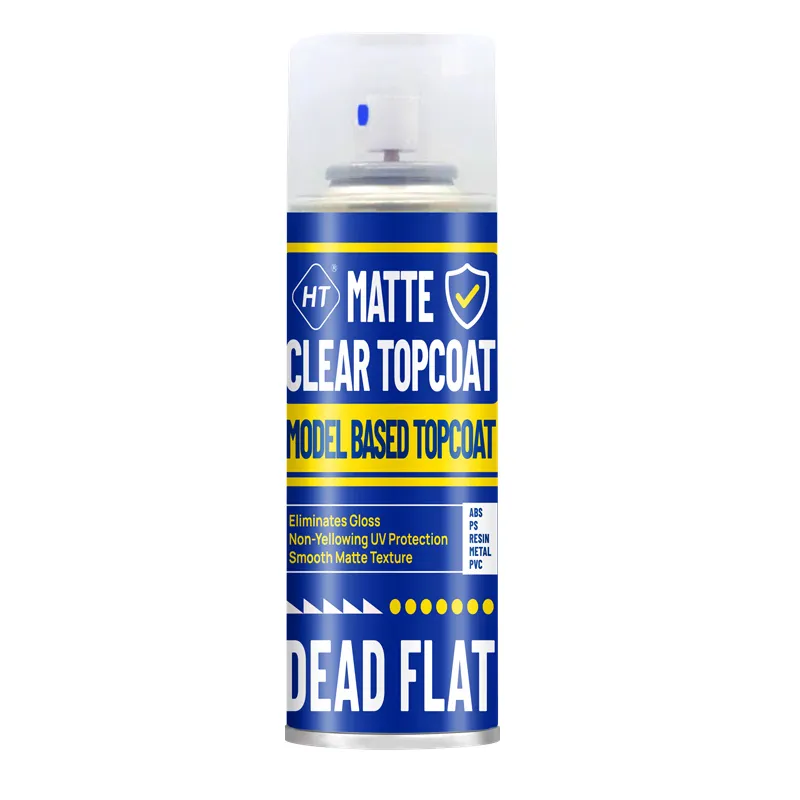
Huotian offers finishes from full gloss (greater than 85 GU) to dead matte (less than 5 GU) across our product range, including HT-011 Matte Clear Topcoat for converting any color to a uniform matte appearance.