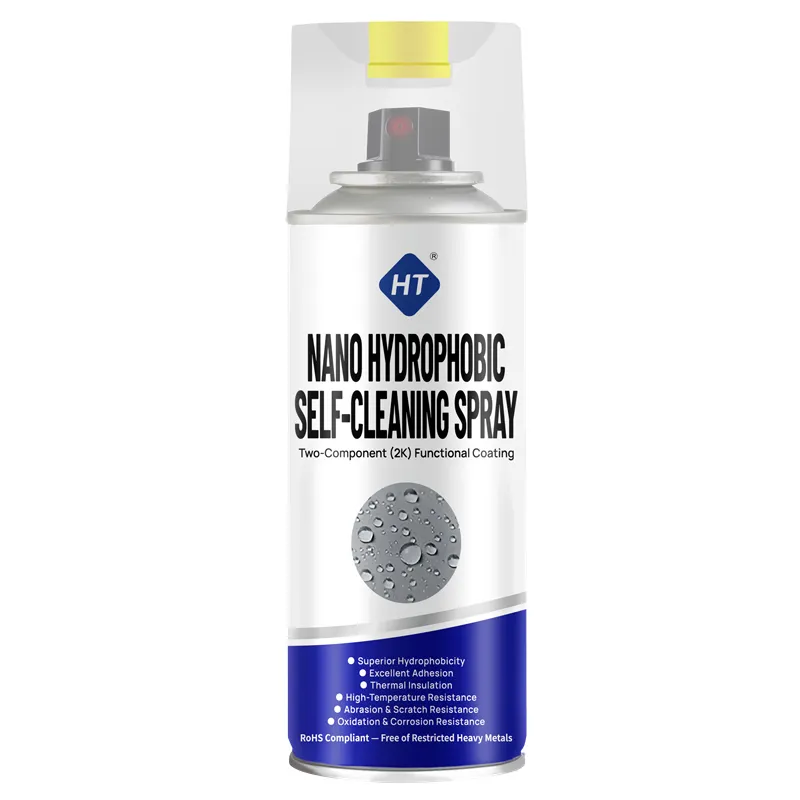
Waterproof sprays use fluoropolymer, silicone, or nano-ceramic chemistry to repel water. OEM buyers should specify: the substrate, required water contact angle (higher = more hydrophobic), breathability needs, and durability requirements.
Types of Waterproof Spray Chemistry
Fluoropolymer-based (PFE, PTFE) offers the highest water contact angle (110-120 degrees) and the longest durability. Used for outdoor gear, medical textiles, and industrial fabrics. Silicone-based provides good water repellency (100-110 degrees) with better breathability. Used for leather, shoes, and general textiles. Nano-ceramic (silica-based) creates a superhydrophobic surface (130-150 degrees) with self-cleaning properties. Used for glass, electronics, and solar panels. Wax-based is the cheapest but shortest-lasting. Used for temporary protection.
Nano Hydrophobic Coatings: The Self-Cleaning Effect
Nano hydrophobic coatings (like HT-024) create a microscopic rough surface that causes water to bead up and roll off, carrying dirt with it. This is called the Lotus Effect. The contact angle exceeds 130 degrees. Applications include solar panel self-cleaning, anti-fouling for marine equipment, anti-graffiti for buildings, and electronics water resistance. The challenge is durability -- nano coatings wear off with abrasion. For OEM products, specify the expected abrasion cycles.
Fabric and Textile Waterproofing
Fabric waterproofing requires balancing water repellency with breathability. Fluoropolymer treatments work best for outdoor gear. Silicone treatments work for fashion and indoor textiles. The key spec is hydrostatic pressure resistance -- how much water pressure the fabric can withstand before leaking. For outdoor gear, 10,000mm+ is expected. For indoor furniture, 1,000mm is sufficient.
Can waterproof spray be used on electronics?
Yes, but only specific formulations. Nano-ceramic coatings are used for PCB water resistance. Conformal coatings (like HT-006) protect circuit boards from moisture and corrosion. Standard waterproof sprays for fabric should never be used on electronics -- they can leave conductive residue or trap moisture.