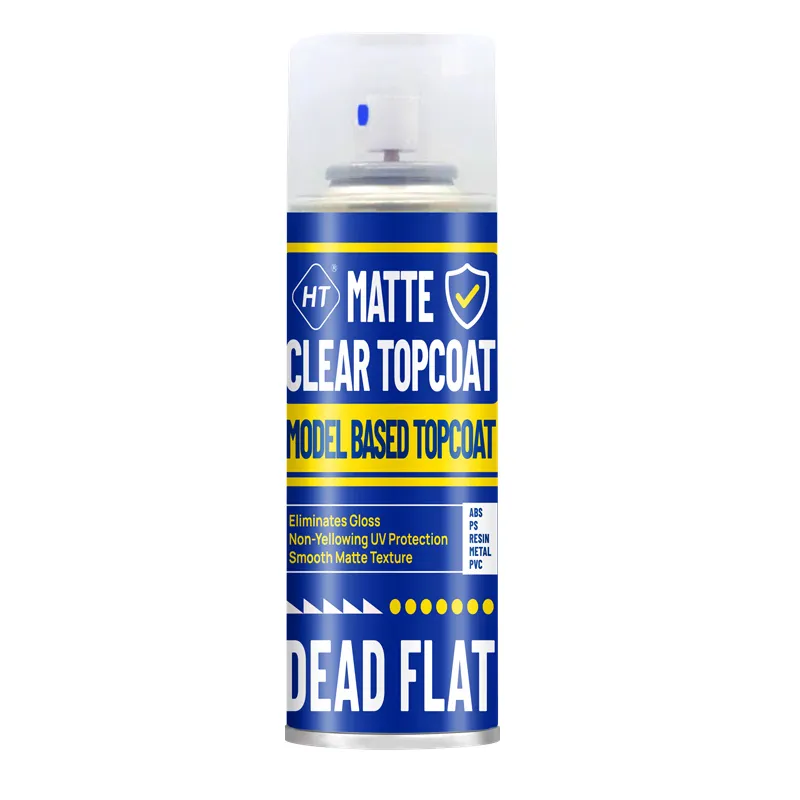
Clear coat provides UV protection, chemical resistance, and the final gloss level. Gloss (80+ GU) is easiest to produce. Matte (below 10 GU) requires flattening agents that can weaken the film. OEM buyers should specify gloss level at 60 degrees and UV resistance requirements.
Gloss Levels and How They Are Measured
Gloss is measured with a gloss meter at 60 degrees. High Gloss (80-95 GU) is the standard for automotive and decorative applications. Semi-Gloss (40-70 GU) is common for industrial equipment. Satin (20-40 GU) is used for furniture and consumer electronics. Matte (below 10 GU) is trending for modern industrial design. The difference is flattening agents -- microscopic particles that scatter light. More flattening agent = lower gloss but also weaker film. This is why matte clear coats are less durable than gloss.
UV Protection: Why Clear Coat Matters
UV radiation breaks down paint binders, causing chalking, fading, and film degradation. Quality clear coats contain UV absorbers (benzotriazole or triazine-based) and HALS (Hindered Amine Light Stabilizers) that absorb UV energy and neutralize free radicals. Without UV-protected clear coat, colored spray paint fades 50 percent faster. For outdoor applications, always specify UV-resistant clear coat. At Huotian, HT-011 Matte Clear and HT-009 2K Topcoat both include UV packages.
Matte vs Gloss: The OEM Production Challenge
Matte clear coats are harder to produce consistently. Flattening agents can settle during storage, causing batch-to-batch variation. The surface is more prone to showing fingerprints and scratches. Repairing matte finishes is nearly impossible -- touch-ups are always visible. For OEM buyers, matte finishes require tighter quality control and higher scrap rates. Gloss finishes are more forgiving and easier to repair. Choose matte only when the design demands it.
Can I mix clear coat with colored spray paint?
No. Clear coat is designed to be applied as a separate topcoat over colored paint. Mixing clear into colored paint dilutes both the color and the protective properties. The correct system is: Primer (optional) then Color coat then Clear coat. Each layer has a specific function. Mixing them compromises all three.
Read more about [2K vs 1K comparison](/en/blog/2k-polyurethane-vs-1k-enamel-spray-paint-comparison/). Read more about [urethane vs acrylic](/en/blog/urethane-vs-acrylic-spray-paint-comparison/)