ABS and polystyrene paint easily with standard spray paint. Polyethylene and polypropylene require adhesion promoters. Polycarbonate needs special formulation to avoid crazing. PVC needs plasticizer-resistant paint. Always identify the plastic before choosing paint.
The Plastic Identification Problem
Most plastic products are not labeled with resin type. For OEM buyers, this is a critical issue. The recycling number (1-7) gives a clue but is not always present. Burn testing and solvent testing can identify resin types but are destructive. The safest approach: ask your plastic supplier for the exact resin specification. Then match the paint formulation to that resin. At Huotian, we maintain formulations for ABS, polystyrene, polycarbonate, polypropylene, polyethylene, PVC, and nylon.
Painting ABS and Polystyrene (Easy)
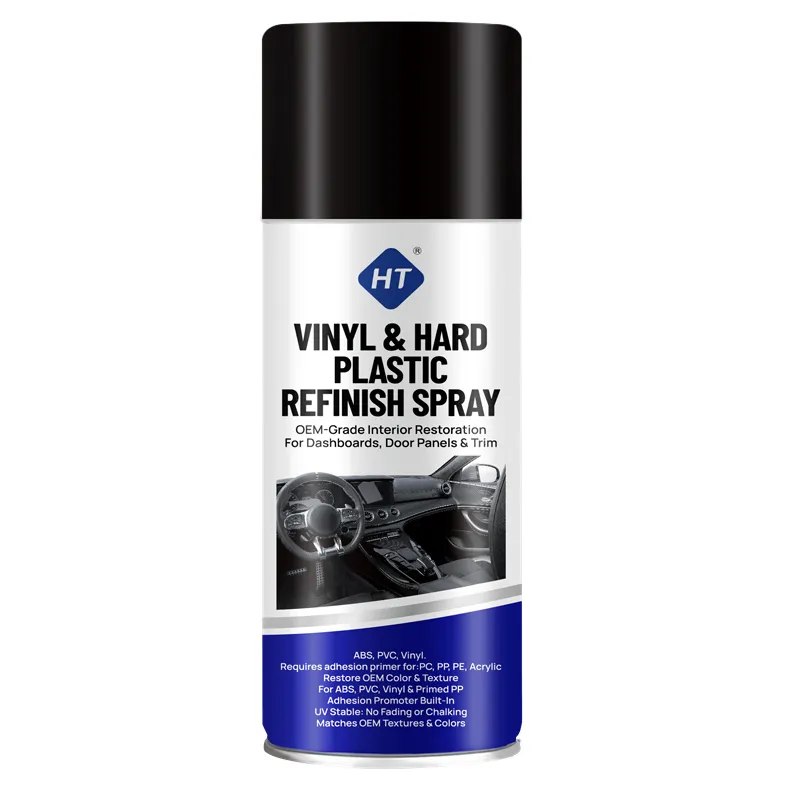
ABS and polystyrene are the easiest plastics to paint. Standard spray paints adhere well because these resins are slightly porous and have surface energy above 38 dynes per cm. Clean with isopropyl alcohol, apply light coats, and standard acrylic or lacquer-based spray paints work. For production, HT-016 Vinyl and Hard Plastic Refinish Spray is formulated for ABS and similar hard plastics.
Painting Polypropylene and Polyethylene (Hard)
Polypropylene (PP) and polyethylene (PE) have surface energy below 30 dynes per cm -- most paints cannot wet the surface. Solutions include: Flame treatment (gas flame oxidizes the surface, raising surface energy above 38 dynes). Plasma treatment (industrial version of flame treatment). Corona discharge (for film and sheet applications). Adhesion promoter primer (contains polyolefin bonding agents). Without one of these treatments, paint will peel off PP and PE in sheets.
Painting Polycarbonate and Nylon (Special)
Polycarbonate (PC) is sensitive to solvents -- many spray paints cause crazing (micro-cracks). Use water-based or specifically formulated solvent-safe paints. Nylon (PA) is hygroscopic -- it absorbs moisture from the air, causing paint bubbling. Dry nylon parts in an oven (150F for 2 hours) before painting. Both resins need specific formulations that account for their unique properties.
What is the best spray paint for plastic?
For ABS/polystyrene: any quality spray paint. For PP/PE: adhesion promoter + compatible topcoat. For polycarbonate: solvent-safe formulation. For nylon: pre-drying + flexible formulation. For unknown plastic: test with adhesion promoter first. At Huotian, we recommend HT-016 for hard plastics and adhesion promoter systems for polyolefins.