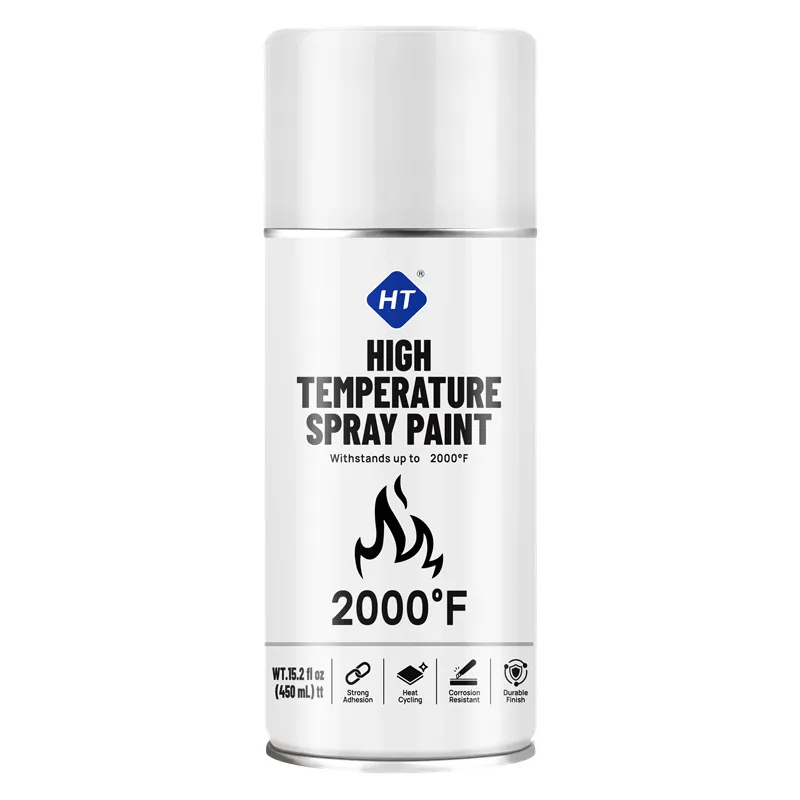
High-heat spray paints withstand 500-2000F. Silicone-based formulas handle 500-1200F. Ceramic coatings reach 2000F+. OEM buyers must match the temperature rating to the application.
Temperature Ratings Explained
High-heat paints are rated by continuous operating temperature. 500F (260C) for engine blocks and brake calipers. 600-1000F (315-540C) for grills and fireplaces. 1200F (650C) for high-performance exhausts. 2000F (1093C) for industrial furnaces. The chemistry differs: Acrylic-silicone for 500-1200F, ceramic-based for 1200-2000F requiring thermal curing, and pure silicone for 800-1200F with excellent heat resistance but poor adhesion without primer.
Top Applications and OEM Recommendations
Grills and Smokers need 1200F rating. Engine Blocks need 500F with oil resistance -- engine enamel is NOT the same as high-heat paint. Exhaust Systems need 1200F+ with multiple thin coats and proper cure break-in. At Huotian, HT-001 and HT-033 cover most high-heat applications.
Why does high-heat paint burn off?
High-heat paint fails from three causes: insufficient curing (most need heat cycling to fully cure), wrong temperature rating (500F paint cannot survive 1000F exhaust), and contamination (oil or grease carbonizes and destroys adhesion).