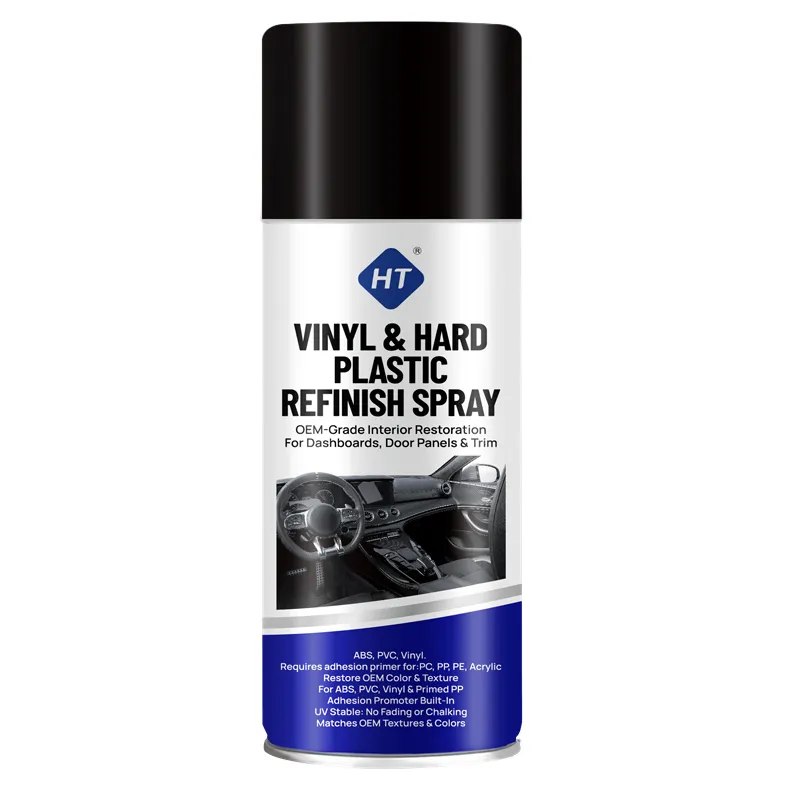
Metal surfaces need epoxy or enamel-based paints with rust inhibitors. Plastic requires adhesion promoters and flexible acrylic formulas. Wood needs stain-blocking primers and compatible topcoats. OEM buyers should source formulations engineered for each surface.
Spray Paint for Metal: What OEMs Need to Know
Metal is the most common surface for spray paint applications. The key challenge is corrosion resistance and adhesion to smooth surfaces. For OEM buyers, metal spray paints fall into three categories: Direct-to-metal (DTM) formulations combine primer and topcoat in one can. Rust-preventive coatings contain zinc phosphate or similar corrosion inhibitors. High-temperature formulations are silicone-based paints that withstand 600-1200F. When sourcing for metal applications, verify the salt spray test results (ASTM B117). Quality DTM paints should withstand 500+ hours without red rust.
Spray Paint for Plastic: The Adhesion Challenge
Plastic is one of the most difficult surfaces for spray paint. Unlike metal, plastic is non-porous and often has mold release agents that prevent paint adhesion. OEM buyers should look for built-in adhesion promoters containing polyolefin primers that chemically bond to polypropylene and polyethylene. Flexible binders like acrylic-latex hybrids move with the plastic without cracking. Critical test: after drying for 24 hours, the paint should pass cross-hatch adhesion testing (ASTM D3359) with minimal removal.
Spray Paint for Wood: Stain Blocking and Grain Raising
Wood presents unique challenges for spray paint. The grain absorbs unevenly causing spotting. Tannins in wood can bleed through light-colored paints. OEM formulations should include stain-blocking binders like shellac-based or high-solids acrylics that prevent tannin bleed. Low-grain-raise formulations minimize fiber swelling for smooth finishes on MDF and furniture.
Can one spray paint work for all surfaces?
Universal spray paints exist but are a compromise. They work adequately for rough applications but fail on demanding surfaces like automotive plastic or marine metal. For professional OEM products, always choose surface-specific formulations. At Huotian, we maintain separate product lines for metal, plastic, and wood applications.