Importing aerosol products from China saves 30-50% vs Western manufacturing. Key steps: find a verifiable manufacturer (ISO 9001, 5,000m²+ facility), understand MOQ (3,000-10,000 cans), prepare certifications (REACH for EU, CARB for US, UN1950 for shipping), arrange DG freight (adds 15-30% to shipping costs), and inspect before shipment. Total lead time: 30-60 days.
Why import aerosol products from China?
China is the world's largest aerosol manufacturing hub, producing over 6 billion aerosol cans annually. For global buyers — distributors, private label brands, and industrial suppliers — Chinese manufacturing offers three key advantages:
Competitive pricing: 30-50% lower than Western manufacturers. A standard 400ml spray paint can from a Chinese OEM costs approximately $1.50-3.00 FOB, compared to $3.00-6.00 from US or European manufacturers.
Manufacturing flexibility: Chinese factories typically accept lower MOQs than their Western counterparts. Startups can begin with 3,000 cans per SKU, while established manufacturers may require 10,000+.
Established supply chain: China's aerosol ecosystem — valve manufacturers, can producers, propellant suppliers, label printers — is concentrated in Guangdong province, reducing lead times and logistics costs.
Step 1: How to find a reliable aerosol manufacturer in China
Not all Chinese aerosol factories are equal. Here is what to look for:
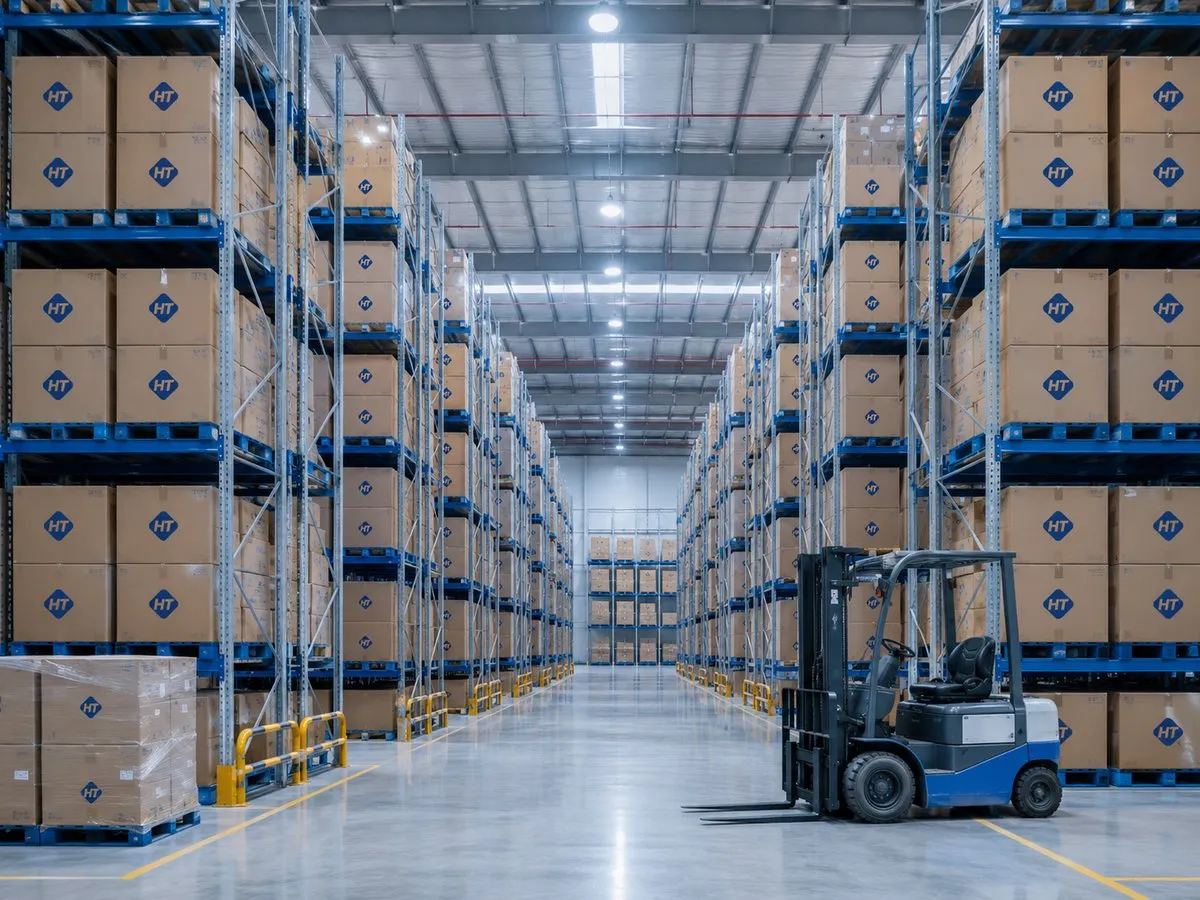
Factory size and equipment — Look for facilities with 5,000+ m² and automated production lines. Huotian operates 6 automated lines in a 5,000m² facility with annual capacity exceeding 1 million cans.
Certifications — Minimum requirement is ISO 9001. Export to EU requires REACH compliance. Export to US requires CARB compliance for certain products. Also look for UN test reports for dangerous goods shipping.
Export experience — A manufacturer exporting to 20+ countries (like Huotian) understands different customs regulations, documentation requirements, and shipping logistics.
Product range — A broad product range indicates technical capability. Huotian offers 34 products from household to industrial applications.
Communication — Responsive English-speaking sales team, willingness to provide factory tour (video or in-person), transparent about pricing and lead times.
Step 2: Understanding MOQ and pricing
Minimum Order Quantities (MOQ) are one of the most important considerations for new importers:
Standard products (off-the-shelf formulations): MOQ typically 1,000-3,000 cans per SKU. Huotian starts at 3,000 cans.
Custom formulations (your proprietary formula): MOQ 5,000-20,000 cans depending on formulation complexity.
Custom packaging (your can design, label, barcode): MOQ 3,000-10,000 cans.
Full custom (formula + packaging + branding): MOQ 5,000-15,000 cans.
Pricing structure typically includes: base price per can (formulation-dependent), can and valve cost, label printing, packaging (cartons/pallets), and FOB shipping from Chinese port.
Step 3: Certification and compliance by market
Each target market has specific regulatory requirements:
European Union: REACH registration for chemical substances, CLP classification and labeling, EU Safety Data Sheet (SDS) in local language, VOC Directive compliance.
United States: CARB compliance (California Air Resources Board), ASTM D standards for spray paint quality, Consumer Product Safety Commission (CPSC) requirements.
Mexico and Latin America: NOM standards (Mexican Official Standards), usually following US or EU frameworks.
Middle East: SASO (Saudi Standards) or local equivalent, GSO (Gulf Standards Organization) for GCC countries.
Africa: Individual country import permits required, often simpler than EU/US but slower customs processing.
Universal requirement: All aerosol products must comply with UN Model Regulations for dangerous goods transport (UN1950, Class 2.1).
Step 4: Dangerous goods shipping (the tricky part)
Aerosol cans (UN1950, Class 2.1 flammable gas) require special handling throughout the supply chain:
Classification — All products must be classified by a certified laboratory. Your manufacturer should provide UN test reports.
Packaging — Aerosols require UN-approved combination packagings (inner aerosol cans, outer fiberboard boxes or wooden crates).
Labeling — Each package must display the UN number, proper shipping name, hazard labels (flammable gas), and limited quantity mark (if applicable).
Documentation — Required documents: Dangerous Goods Declaration, Material Safety Data Sheet (MSDS/16-section SDS), Certificate of Origin, Packing List, Commercial Invoice, Bill of Lading (sea) or Air Waybill (air).
Logistics partners — Use freight forwarders with DG (Dangerous Goods) certification. Not all freight companies accept aerosol shipments.
Cost — DG shipping typically adds 15-30% to freight costs compared to non-hazardous goods.
Step 5: Quality control before shipment
Never skip quality inspection before shipment. Here is a practical QC checklist:
Pre-production: Approve formula, color samples (physical spray-out cards), can design/label proof, packaging specifications.
During production: Request mid-production photos/videos, check can fill weights, verify valve function, inspect label application.
Pre-shipment inspection: Third-party inspection (SGS, Bureau Veritas, Intertek) recommended for first orders. Random sampling per AQL (Acceptable Quality Level) standards. Pressure test (aerosol cans must withstand 1.5x design pressure), leak test (water bath method), spray pattern test.
Huotian provides pre-shipment video inspection, detailed QC reports, and full traceability from raw materials to finished goods.
Step 6: Payment terms and contracts
Standard procedures for first-time importers:
Payment terms: 30% deposit / 70% balance against copy of shipping documents. T/T (wire transfer) is most common. L/C available for larger orders.
Incoterms: FOB (Free on Board) is standard — manufacturer delivers to departing vessel at Chinese port (e.g., Shenzhen, Ningbo, Shanghai). CIF (Cost, Insurance, Freight) — manufacturer includes sea freight and insurance to your destination port.
Contract essentials: Product specifications (formulation, color code, VOC content, can size), packaging details (label artwork, carton quantity, pallet configuration), QC standards and inspection rights, delivery schedule, warranty terms (typical: 12-24 months from production date).
Step 7: Customs clearance at destination
Prepare for customs clearance at your destination port:
Required documents: Commercial Invoice (2-3 copies), Packing List, Bill of Lading / Air Waybill, Certificate of Origin (Form A or CO), MSDS/SDS, Dangerous Goods Declaration, Import License (if required by your country).
Common issues: Incorrect HS Code classification (aerosol paints typically fall under HS 3208-3209), missing or outdated MSDS, labeling not matching local language requirements, customs holds for random inspection (DG shipments get extra scrutiny).
Pro tip: Work with a customs broker experienced with chemical/DG imports. The extra cost (typically $200-500 per shipment) is worth avoiding delays.
Building a long-term relationship with your Chinese supplier
The best importers build partnerships, not just transactional relationships:
Start small — Begin with 2-3 SKUs to test quality, logistics, and market response.
Visit the factory — Nothing builds trust like walking the production floor. Huotian welcomes buyer visits to our 5,000m² facility in Zhongshan, Guangdong.
Communicate regularly — Weekly updates during production, quarterly business reviews.
Plan ahead — Share your 6-12 month forecast to secure production capacity.
Grow together — As your volume increases, negotiate better terms. Loyalty and consistency earn preferential pricing.
Importing aerosol products from China is a proven path to competitive advantage. With the right partner, the process is straightforward — and the savings fund your growth.